In short
YNAB is better for people who want deep category control and are willing to maintain a budget every week. Shelter is better for people who want auto-built spending targets, adjustable category edits, and a forward-looking view of whether upcoming bills still fit.
If you are comparing YNAB and Shelter, you are really comparing two different theories of how money management should work.
YNAB says the path to control is intentional planning. Every dollar gets a job. You decide where money goes before you spend it, then maintain the system category by category.
Shelter starts from a different premise: most people do not want to build and maintain a full manual budget. They want a plan that starts from real account activity, shows whether they are safe over the next few weeks, and makes it easy to adjust spending targets without blowing up rent, bills, or cash flow.
That difference matters more than the feature checklist.
If you want the dedicated product page, start with our YNAB alternative guide. This article goes deeper on which philosophy fits which kind of user.
The Core Difference
YNAB is a manual budgeting system with strong rules. Shelter is a forecast-aware budgeting system with lower maintenance.
In YNAB, you:
- assign dollars to categories
- reconcile and reassign when life changes
- stay engaged with the budget continuously
In Shelter, you:
- connect your accounts
- get an auto-built plan from your real income, bills, and spending behavior
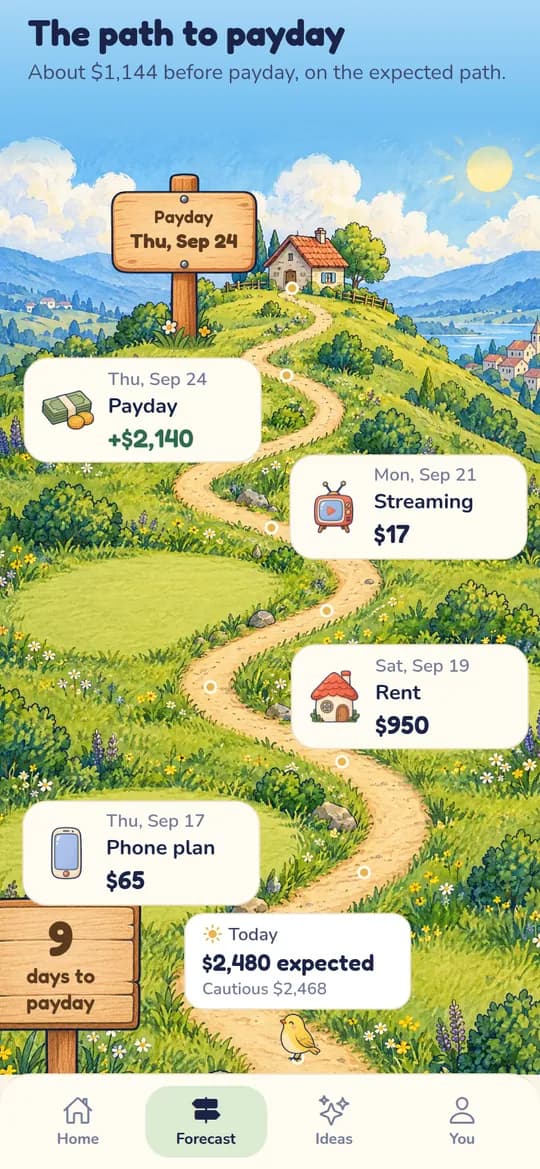
- see a forecast-aware "safe to spend" view
- adjust category targets when needed and preview the estimated impact before saving
Neither approach is universally better. But they solve very different problems.
Where YNAB Is Better
YNAB is the stronger product if you want active control over every category and enjoy hands-on budgeting.
It is especially good for:
- people who like zero-based budgeting
- households that want to pre-plan every dollar
- users who are motivated by detailed category discipline
- anyone who wants budgeting to feel like an active weekly ritual
If you are the kind of person who opens a spreadsheet for fun, YNAB may honestly be the better fit. Shelter is not trying to out-YNAB YNAB on budgeting depth.
Where Shelter Is Better
Shelter is stronger if your real problem is not category discipline alone. It is timing, uncertainty, and day-to-day money anxiety.
That is where a forecast-aware budget model matters.
Instead of asking, "Did I overspend dining this month?" Shelter is built to answer:
- Will I still be okay when my next bills hit?
- How tight does this month get?
- If I loosen or tighten this category, what happens to the next 30 days?
- What is actually safe to spend right now?
That is a better fit for:
- people who want less budgeting maintenance
- people with irregular or messy cash flow
- users who want guidance without constant category work
- former YNAB users who fell off because the upkeep was too high
The Budget Maintenance Problem
This is the real separator.
YNAB works best when you stay close to it. If you stop checking categories, stop reallocating, or stop reconciling, the system loses its edge. That does not make YNAB bad. It just means the product assumes a high level of ongoing participation.
Shelter assumes most people want useful output from their financial data without turning budgeting into a hobby.
That is why the recent Shelter budget flow matters:
- the budget is auto-built from actual activity
- category targets can be edited manually when the default plan is not quite right
- the edit flow shows estimated forecast impact before saving
That combination gives you some control without forcing you into a full manual budgeting workflow.
Feature Comparison
| Feature | Shelter | YNAB |
|---|---|---|
| Setup style | Auto-built from linked accounts | Manual budget setup; direct bank import is optional |
| Core question | "What is safe to spend?" | "What should each dollar do?" (give every dollar a job) |
| Looking ahead | 30-day daily balance forecast, lowest-balance day | Scheduled transactions show upcoming expenses; a loan payoff simulator |
| Manual category control | Light, adjustable targets | Central to the product: every dollar is assigned |
| Price | $9.99/month or $79/year | $14.99/month or $109/year, with a 34-day free trial on ynab.com |
YNAB details are from its own website and help center, checked September 29, 2026. Every source is listed in the Shelter vs YNAB comparison.
Zero-Based Budgeting vs Forecast-Aware Budgeting
Zero-based budgeting is strong at intention. Forecast-aware budgeting is stronger at connecting the plan to what is actually about to happen.
That sounds simplistic, but it is the practical difference users feel.
Manual budgeting tells you what the plan was. Forecast-aware planning tells you whether the next two weeks still work after real life happens.
For many people, that second question is more valuable than the first one.
This is why we keep coming back to cash flow forecasting. Most money stress comes from timing problems, not from perfectly optimized category allocations. Rent, debt payments, and subscriptions hit before the next paycheck. A category budget does not always catch that early enough. A forecast-aware budget can.
Who Should Choose Which
Choose YNAB if:
- you want rigorous category planning
- you are willing to keep the system current
- you want a budgeting method, not just a money dashboard
Choose Shelter if:
- you want a budget that starts from real account behavior instead of manual setup
- you care more about upcoming cash flow than category micromanagement
- you want to adjust a plan quickly and see the likely effect
- you have tried manual budgeting before and eventually stopped maintaining it
The Bottom Line
YNAB is better if you want to practice budgeting as a discipline.
Shelter is better if you want a lower-maintenance budgeting system that uses your real financial data to answer the question most people actually care about: what is safe to spend, and what happens next if I change the plan?
If that second model sounds closer to how you want money management to feel, start with the YNAB alternative page, then read why budgets do not work and what safe to spend means.

Take control of your cash flow
Shelter connects to your bank, forecasts your balance 30 days out, and alerts you before problems happen.