In short
Manual budgeting fails because it asks people to maintain a detailed financial control system during normal, messy life. A better approach is lower-maintenance: auto-built spending targets, forward-looking cash flow visibility, and simple edits that show likely impact before you commit.
Manual budgeting sounds responsible. In practice, it fails a lot.
Not because people are lazy. Not because they do not care. Mostly because the system asks for too much maintenance in exchange for too little useful feedback.
You set category limits. You try to remember them. You track spending. You fall behind. The numbers drift. The guilt kicks in. Then you stop opening the app.
That cycle is common because manual budgeting is built around a fragile assumption: that most people want to actively maintain a financial operating system every week.
Most people do not.
Why Manual Budgets Break Down
The problem is not the idea of planning. It is the cost of maintaining the plan.
Manual budgets usually require some combination of:
- assigning category amounts in advance
- checking categories constantly
- recategorizing transactions
- rebalancing the plan when real life shifts
- staying emotionally engaged with the system even after a messy week
That is a lot of work for a tool that often tells you what already happened instead of what happens next.
They Are Backward-Looking
This is the deepest flaw.
Most manual budgets are good at retrospective control. They tell you:
- how much you already spent
- which category went over
- whether you stayed inside the monthly plan
But that is not the question that causes the most money stress.
The real question is usually:
Can I afford the next two weeks?
That is a cash flow question, not a category question.
If rent, debt, and subscriptions all land before payday, a manually maintained category system may still look "fine" while your actual account gets dangerous.
They Depend Too Much on Willpower
Manual budgets treat discipline like the main product feature.
That works for some people. It does not work for most people. The more stressed, busy, or financially stretched you are, the less likely you are to keep a detailed budget updated. That is exactly when you need help the most.
This is why why budgets do not work resonates with so many people. The issue is not just preference. It is human bandwidth.
What Works Better
A better system keeps the useful part of budgeting and throws away the maintenance burden.
That means:
- automatic visibility into real spending behavior
- a forward-looking view of the next 30 days
- category guidance that can adjust to reality
- lightweight edits when you want more control
This is the model Shelter is moving toward more clearly now.
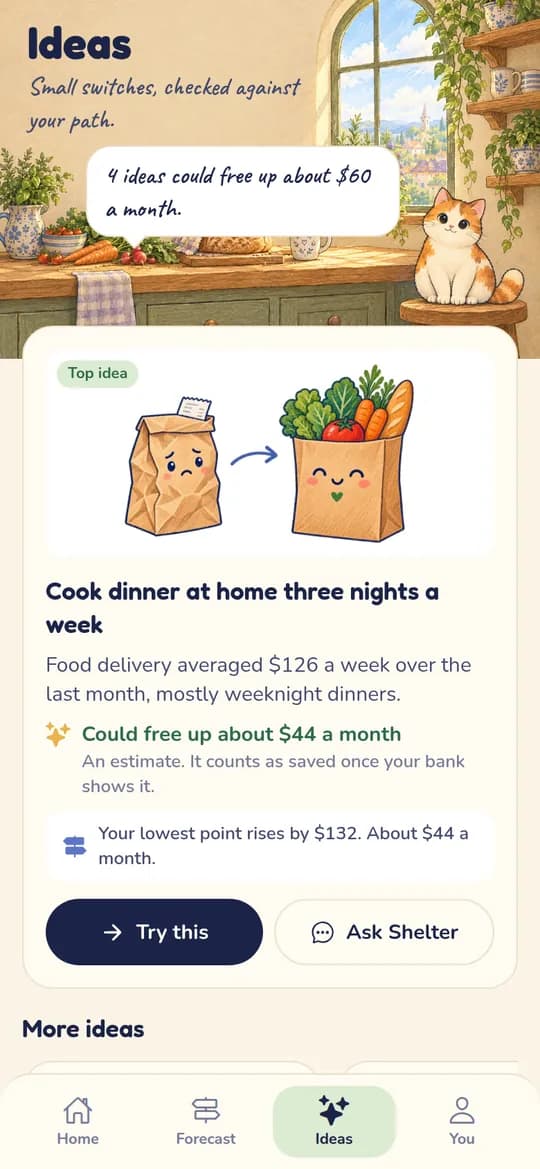
Instead of requiring you to build a budget from scratch, the app can:
- auto-build a spending plan from your real financial behavior
- show a safe-to-spend view grounded in forecasted cash flow
- let you adjust category targets manually when needed
- show the estimated forecast impact before you save the change
That is still planning. It is just planning with less friction and better timing awareness.
Manual Budgeting vs Forecast-Based Planning
| Manual Budgeting | Forecast-Based Planning | |
|---|---|---|
| Main question | Did I stay in my categories? | What is safe to spend next? |
| Maintenance | High | Lower |
| Based on | Planned category limits | Real balances, bills, and patterns |
| Good at catching timing problems | Weak | Strong |
| Requires constant attention | Yes | Less |
| Best for | People who like budget upkeep | People who want guidance without upkeep |
The New Middle Ground
For a long time, personal finance apps pushed users into two extremes:
- full manual budgeting
- passive tracking with pretty charts
Neither is enough on its own.
What many people actually want is a middle ground:
- less work than manual budgeting
- more actionability than spend tracking
- enough control to make changes deliberately
- enough forecasting to avoid surprises
That middle ground is what forecast-aware budgeting is supposed to provide.
Who Should Still Use Manual Budgeting
To be clear, manual budgeting is not wrong for everyone.
It still makes sense if:
- you genuinely enjoy category planning
- you want maximum control over every dollar
- you are willing to maintain the system consistently
If that is you, a tool like YNAB may still be a better fit. Our YNAB alternative page explains that tradeoff directly.
Who Should Stop Forcing It
You should probably stop forcing manual budgeting if:
- you keep restarting budgets every few months
- you mostly want clarity, not a hobby
- your biggest stress comes from paycheck timing and bill stacking
- you need to know what changing one category actually does to the rest of the month
That is where a forecast-first approach is stronger.
The Bottom Line
Manual budgeting fails because it asks too much from the user and answers the wrong question too late.
What works better for most people is simpler:
- use real account data
- look forward, not just backward
- get a default plan automatically
- make edits only when they matter
- preview impact before committing
If that sounds closer to how money management should feel, read cash flow forecasting explained, what safe to spend means, and budgeting for irregular income.

Take control of your cash flow
Shelter connects to your bank, forecasts your balance 30 days out, and alerts you before problems happen.