Every year, the same big expenses catch people off guard. The car insurance premium that hits all at once. The holiday season that somehow arrives unexpectedly despite happening at the same time every year. The property tax bill. The car registration. The back-to-school supplies.
These are not emergencies. They are predictable expenses that happen to be large and infrequent. And because they are infrequent, people do not plan for them. The money is not there when the bill arrives, so it goes on a credit card, gets taken from savings, or causes a scramble to cover it.
Sinking funds solve this problem entirely. They are one of the simplest, most effective financial strategies that most people have never heard of.
What Is a Sinking Fund?
A sinking fund is money you set aside gradually for a specific, known future expense. You know the expense is coming, you know roughly how much it will cost, and you divide that cost into monthly (or per-paycheck) savings amounts so the money is ready when you need it.
Here is the math at its simplest. Your car insurance costs $1,200 per year, paid in a lump sum every January. Instead of scrambling to find $1,200 in January, you set aside $100 per month starting in February. By the time January rolls around, you have the full amount sitting in your account, waiting. No stress. No credit card. No surprise.
That is a sinking fund. It turns a large, stressful expense into a small, manageable monthly line item.
Common Sinking Fund Categories
The right sinking funds for you depend on your life, but here are the categories that most people benefit from.
Car Maintenance and Repairs
Cars need tires, brakes, oil changes, and occasional repairs. These expenses are not a matter of "if" but "when." A car maintenance sinking fund of $50 to $100 per month means you are never blindsided by a repair bill. Over a year, that is $600 to $1,200 -- enough to cover most routine maintenance and many common repairs.
Holidays and Gift-Giving
The holiday spending crunch hits millions of people every November and December. If you typically spend $500 to $1,000 on gifts, decorations, and holiday activities, a sinking fund of $45 to $85 per month covers it entirely. You arrive at the holiday season with the money already set aside, and January does not start with a credit card hangover. For a detailed plan, read about creating a holiday spending plan.
Insurance Premiums
Car insurance, renters insurance, homeowners insurance -- many of these offer discounts for paying annually instead of monthly. But that only helps if you have the lump sum available when it is due. A sinking fund lets you take the annual discount without the lump-sum shock.
Vacations and Travel
Putting a vacation on a credit card means you are still paying for it months after you get home. A vacation sinking fund changes the equation entirely. Decide how much you want to spend, divide by the number of months until your trip, and automate a transfer. When vacation time arrives, the money is there and the trip is truly free of financial stress.
Home Repairs and Maintenance
Homeowners face a constant stream of maintenance costs: HVAC servicing, appliance replacement, plumbing issues, roof repairs. A common guideline is to set aside 1% of your home's value per year for maintenance. For a $300,000 home, that is $250 per month. That sounds like a lot, but a single HVAC replacement can cost $5,000 to $10,000, and a roof replacement can be $15,000 or more. Regular contributions to a home repair sinking fund prevent these inevitable costs from becoming financial emergencies.
Annual Subscriptions and Memberships
Software subscriptions, professional memberships, warehouse club dues, and domain renewals often bill annually. They are easy to forget until the charge appears on your statement. If you have $200 in annual subscriptions, setting aside $17 per month covers all of them.
Back-to-School Expenses
If you have kids, the August wave of school supplies, new clothes, shoes, activity fees, and technology needs is predictable and significant. A sinking fund that runs from January through July spreads the cost across seven months.
Medical Expenses
If you have a high-deductible health plan, you know you could face several thousand dollars in out-of-pocket costs in any given year. A monthly contribution to a medical sinking fund (or an HSA, which offers tax advantages) means you are prepared when those costs arrive.
How to Calculate Your Monthly Amount
The math is straightforward:
- Estimate the total cost of the expense.
- Determine how many months until you need the money.
- Divide the cost by the number of months.
If your car insurance is $1,200 due in 12 months: $1,200 divided by 12 = $100 per month.
If you want to spend $2,000 on a vacation in 8 months: $2,000 divided by 8 = $250 per month.
If you want to have $500 ready for holiday spending in 10 months: $500 divided by 10 = $50 per month.
Add a small cushion (10-15%) if the expense amount is not exact, like car repairs or home maintenance, where the actual cost might exceed your estimate.
Where to Keep Your Sinking Funds
You have a few options, and the right one depends on how many sinking funds you have and how much you value simplicity versus precision.
One savings account with mental tracking. The simplest approach. Keep all your sinking funds in a single high-yield savings account and track the individual fund balances in a spreadsheet or note. The total balance in the account is the sum of all your funds. This works well if you have two or three sinking funds and do not mind a little manual tracking.
Multiple savings accounts. Some online banks let you create multiple sub-accounts or "buckets" within a single savings account, each with its own name and balance. This is ideal for sinking funds because you can see exactly how much you have set aside for each category without any mental math or spreadsheet tracking.
Envelope system (digital or physical). The classic envelope method applies here too. Allocate a portion of each paycheck to labeled envelopes (physical or digital). When the expense arrives, the envelope has the money.
Whichever method you choose, the key is that the money is separate from your regular checking account. If sinking fund money sits in checking, it will get spent on something else. Separation is what makes the system work.
Sinking Funds vs. Emergency Funds
People sometimes confuse sinking funds with emergency funds, but they serve different purposes.
An emergency fund is for truly unexpected expenses -- a job loss, a medical emergency, a car accident. You do not know when these will happen or how much they will cost. The fund exists as a general-purpose buffer against the unknown.
A sinking fund is for known, predictable expenses. You know your car insurance is due in January. You know the holidays happen in December. You know your car will eventually need new tires. These are not surprises. They are certainties you are planning for.
The distinction matters because dipping into your emergency fund for predictable expenses defeats its purpose. If you use your emergency fund to pay for Christmas gifts, it will not be there when an actual emergency hits. Sinking funds protect your emergency fund by handling the predictable large expenses separately.
Automating Your Sinking Funds
The best way to fund sinking funds is the same way you fund any savings goal: automatically. Set up recurring transfers to run on payday. Even if you have five sinking funds totaling $300 per month, that is a single transfer (or five small ones) that runs without any action on your part.
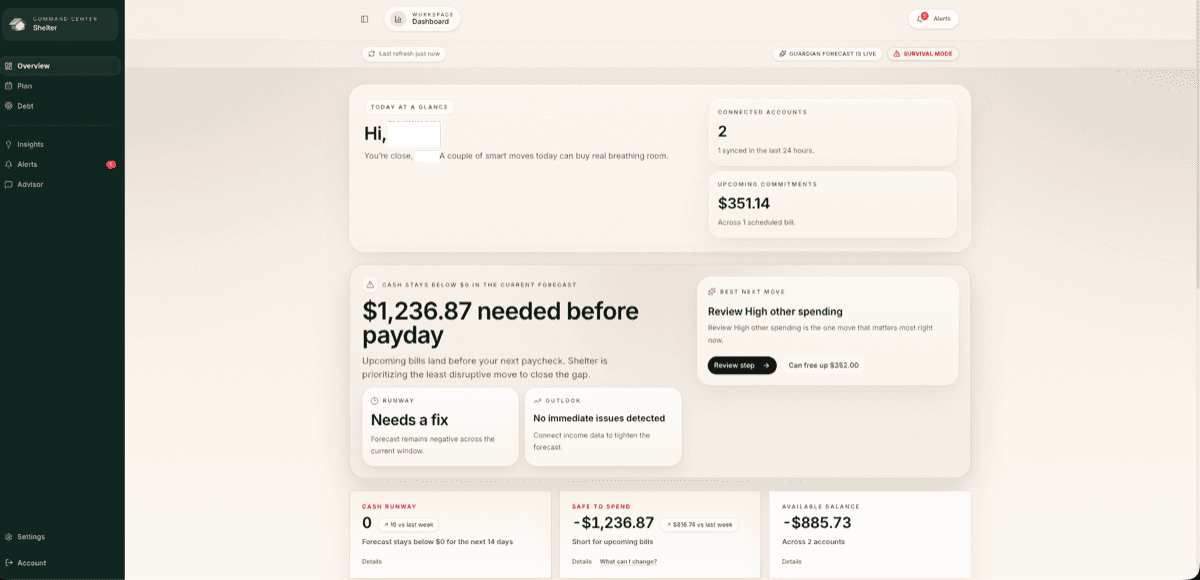
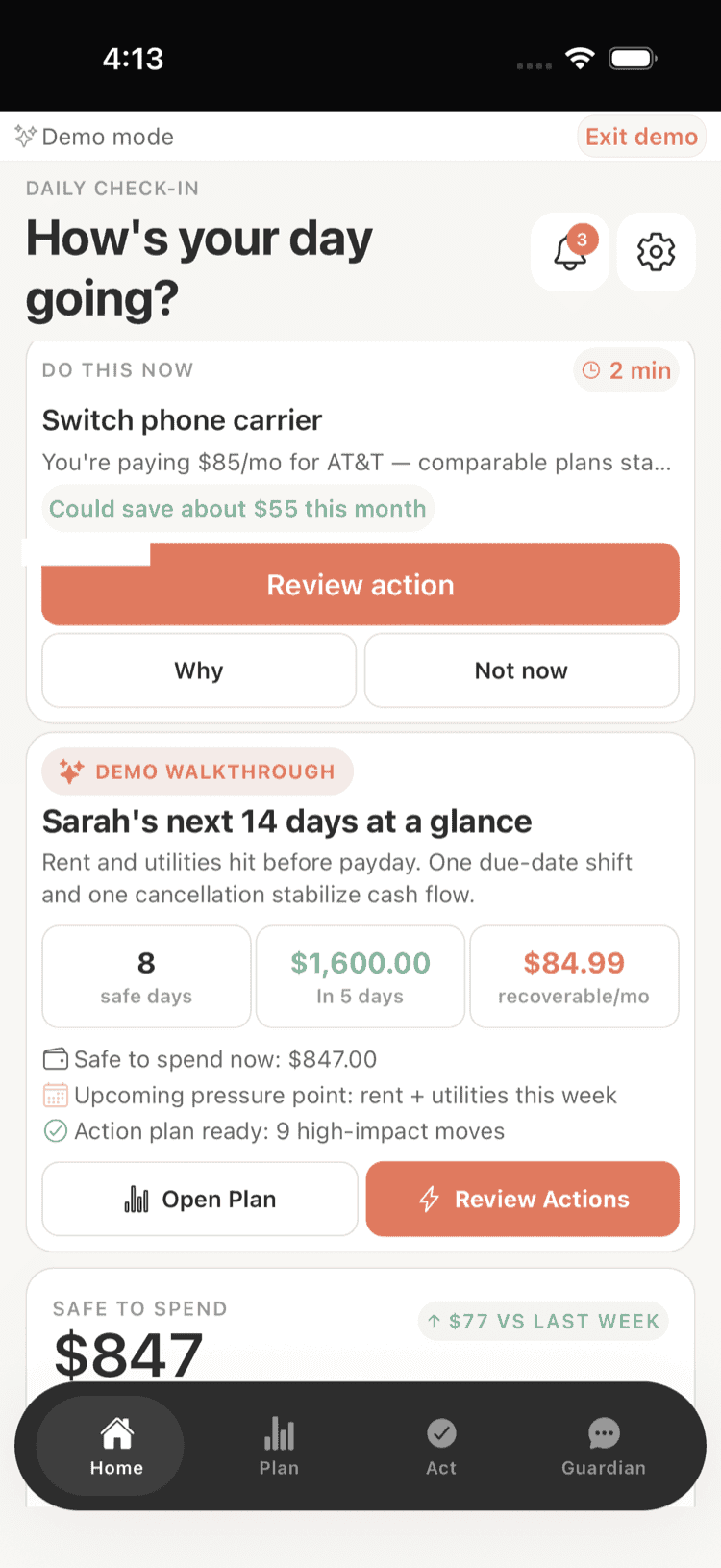
Shelter helps you see how these transfers affect your day-to-day cash flow. Because it projects your balance 30 days out, you can see whether adding $300 in monthly sinking fund contributions creates any tight spots in your checking account. If it does, you can adjust the amounts or timing before you run into trouble. The features page shows how this forward visibility works.
For more on the mechanics of setting up automated transfers, the guide on how to automate your savings covers timing, amounts, and common pitfalls in detail.
Getting Started
If you have never used sinking funds, do not try to set up eight of them at once. Start with the one expense that causes you the most stress or financial disruption when it arrives. For many people, that is either holiday spending or car maintenance.
Calculate the monthly amount, set up an automated transfer to a savings account, and let it run. After a month or two, when you see the balance growing and you feel the reduced anxiety of knowing the expense is being handled, add a second sinking fund. Then a third.
Over time, you will find that financial surprises get rarer and rarer. Not because unexpected things stop happening -- that is what the emergency fund is for -- but because most of the "surprise" expenses were not really surprises at all. They were predictable costs that nobody planned for.
Sinking funds are the plan. They are not glamorous, they are not complicated, and they will not make you rich overnight. But they will make the next holiday season, the next insurance bill, and the next car repair feel like a non-event instead of a crisis. That is worth more than most people realize until they experience it.
Take control of your cash flow
Shelter connects to your bank, forecasts your balance 30 days out, and alerts you before problems happen.