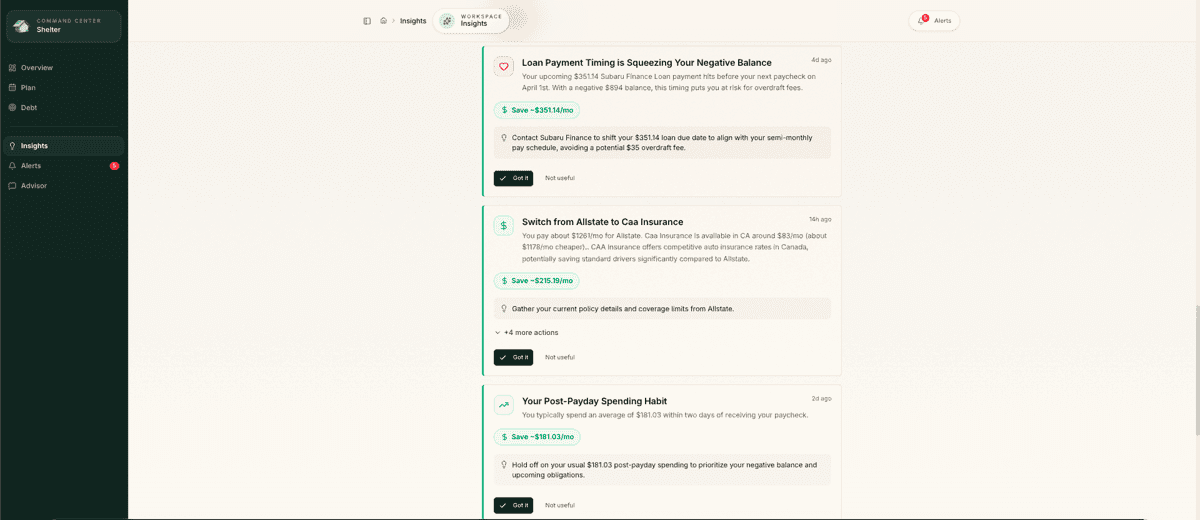
Reducing your monthly bills does not have to mean living like a monk. Most people can cut $100 to $300 per month without giving up anything they actually care about. The savings come from eliminating waste, negotiating better rates, and making a few strategic switches -- none of which require sacrifice, just attention.
Here are 12 practical ways to lower your bills starting this month.
1. Negotiate Your Internet and Phone Bills
This is the single highest-impact call you can make. Internet and phone companies almost always have unadvertised discounts available through their retention departments. The process is simple:
Call your provider and say, "I am reviewing my expenses and considering switching to [competitor name]. Can you offer a better rate?" Be polite, be specific about what competitors are charging, and be willing to follow through.
Most providers will offer $10 to $30 off per month to keep you. If the first representative cannot help, politely ask to speak with the retention or cancellation department. That is where the real discounts live.
Do this once a year. Promotional rates expire, and providers count on you not noticing the price increase.
2. Bundle or Rotate Your Streaming Services
The average household pays for four or more streaming services, totaling $50 to $80 per month. Here is the thing: you are almost certainly not actively watching all of them at the same time.
Instead of paying for everything simultaneously, rotate. Subscribe to one or two services at a time, watch what you want, then cancel and switch to another. Most services have no cancellation penalty and let you re-subscribe instantly. Rotating through three services instead of running all three saves you $15 to $25 per month.
If your household shares accounts, consider family plans or bundles. Disney+/Hulu/ESPN+, Apple One, and similar bundles are often cheaper than subscribing to each service individually.
3. Switch Insurance Providers Annually
Insurance loyalty does not pay. In fact, it costs you. Studies consistently show that people who shop around for auto and home insurance every 12 to 18 months pay significantly less than those who stick with the same provider.
Get quotes from three or four competitors and compare them to your current rate. If a competitor is cheaper, call your current provider with the quotes. They will often match or come close. If they will not, switch. The process takes about an hour and can save $300 to $800 per year.
Do this every year. Your rates change based on your driving record, credit score, home value, and market conditions -- and your current provider is not always the cheapest after those variables shift.
4. Do a Home Energy Audit
Your electric and gas bills have more room to shrink than you might think. Start with the basics:
- Seal air leaks around windows and doors with weatherstripping. This costs $10 to $30 and can reduce heating and cooling costs by 10 to 15%.
- Switch to LED bulbs if you have not already. They use 75% less energy than incandescent bulbs.
- Adjust your thermostat by 2 to 3 degrees. A programmable or smart thermostat that lowers the temperature when you are sleeping or away can save $50 to $100 per year on its own.
- Unplug devices you are not using. "Phantom load" from electronics in standby mode can add $100 or more per year to your electric bill.
Many utility companies offer free home energy audits. Call yours and ask.
5. Refinance High-Interest Debt
If you are carrying a credit card balance, a personal loan, or an older mortgage with a rate above current market levels, refinancing can significantly reduce your monthly payments.
Balance transfer credit cards with 0% introductory APR can save you hundreds in interest if you pay down the balance during the promotional period. Personal loans with lower rates than your credit cards can consolidate multiple payments into one cheaper one.
For mortgages, even a 0.5% rate reduction on a $300,000 loan saves about $90 per month. Run the numbers, factoring in closing costs, to see if a refinance makes sense for your situation.
6. Meal Plan to Reduce Food Waste
The average American household wastes about $1,500 worth of food per year. That is not a typo. We buy more than we eat, and the excess goes in the trash.
Meal planning does not mean eating the same boring meals every week. It means having a rough plan before you go to the store so you buy what you will actually use. Spend 10 minutes on Sunday writing down what you will eat for the week, make a shopping list based on that plan, and stick to it.
This alone can cut grocery spending by 20 to 30% -- not because you are eating less, but because you are throwing away less.
7. Cancel Unused Memberships and Subscriptions
This one deserves its own deep dive, and we wrote one: how to do a subscription audit in 15 minutes. The short version is that most people are paying for at least two or three subscriptions they do not use, totaling $20 to $60 per month.
The most common culprits are gym memberships you do not use, streaming services you do not watch, apps you downloaded once and forgot about, and free trials that converted to paid plans.
Go through your bank statements, identify every recurring charge, and cancel the ones that are not pulling their weight. It takes 15 minutes and often saves more than any other single action on this list.
8. Downgrade Service Tiers You Do Not Fully Use
Before you cancel a subscription entirely, check if there is a cheaper tier that covers what you actually need. Many services charge a premium for features most people never touch.
- Spotify Premium ($11.99/month) vs. Spotify Free ($0) -- if you only listen at home on Wi-Fi, the free tier with ads might be fine.
- Cloud storage -- check how much space you are actually using. You might be paying for 2TB when you only use 50GB.
- Phone plans -- if you are on an unlimited data plan but consistently use less than 5GB, a cheaper limited plan could save $20 to $40 per month.
- Software subscriptions -- many tools offer personal or basic tiers at half the cost of professional plans.
Downgrading is less dramatic than canceling, but the savings add up quickly across multiple services.
9. Use Your Local Library
This is genuinely one of the most underused money-saving resources available. Modern libraries offer far more than books:
- E-books and audiobooks through apps like Libby and Hoopla -- potentially replacing Kindle Unlimited or Audible subscriptions.
- Streaming video through Kanopy, which many libraries offer for free.
- Digital magazines and newspapers -- potentially replacing news subscriptions.
- Wi-Fi hotspot lending at some libraries, which could reduce your phone data plan needs.
A library card is free. The services it gives you access to could replace $30 to $50 per month in subscriptions.
10. Set Up Autopay for Discounts
Many service providers offer a small discount -- typically $5 to $10 per month -- for setting up automatic payments. Insurance companies, internet providers, and utility companies frequently offer this.
The discount is modest, but it is free money for something you were going to pay anyway. And autopay has the added benefit of preventing late fees, which can be $25 to $50 per occurrence.
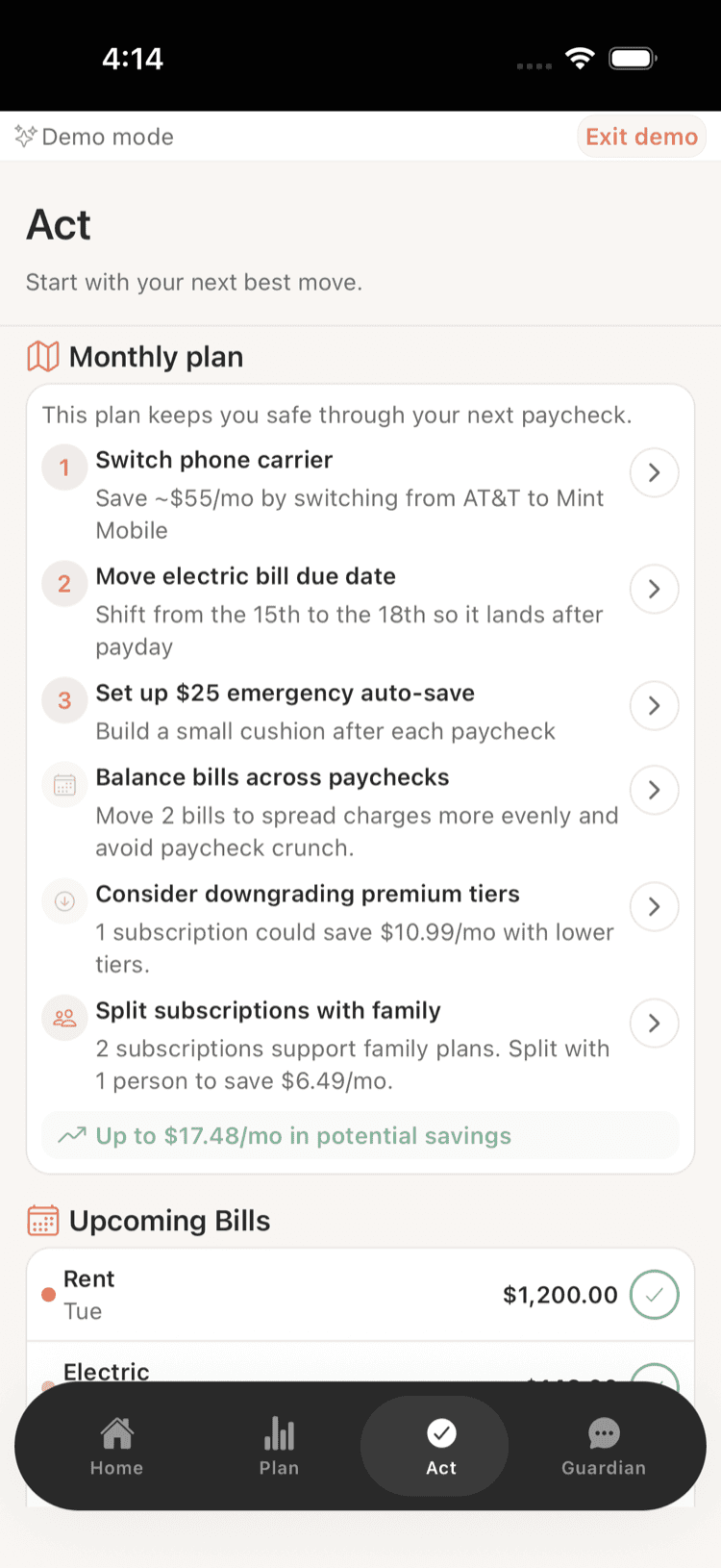
Just make sure you still review your statements regularly. Autopay should not mean "set and forget" -- it should mean "pay on time and review monthly." If you want to see whether you are being charged differently than expected, tools like Shelter can help by showing you all your recurring charges in one place so changes are easy to spot.
11. Review Your Bank Fees
Banks charge fees for a surprising number of things: monthly maintenance, ATM usage, overdrafts, wire transfers, paper statements, and more. Many of these fees are avoidable.
- Monthly maintenance fees are often waived if you maintain a minimum balance or set up direct deposit. Call your bank and ask what the requirements are.
- ATM fees can be avoided by using in-network ATMs or switching to a bank that reimburses out-of-network fees (many online banks do this).
- Overdraft fees can be reduced by opting out of overdraft protection, which means your card will simply be declined rather than incurring a $35 fee.
- Paper statement fees are eliminated by switching to electronic statements.
If your bank charges fees that are hard to avoid, consider switching to an online bank. Many offer no-fee checking accounts with better interest rates than traditional banks.
12. Make Seasonal Adjustments
Some expenses fluctuate with the seasons, and adjusting your behavior slightly can lead to real savings.
- Winter: Lower your thermostat by 2 degrees and wear a warmer layer inside. Use ceiling fans in reverse mode to push warm air down.
- Summer: Use fans before reaching for the AC. Close blinds on sun-facing windows during the hottest hours. Run your dishwasher and laundry at night when energy rates may be lower.
- Holiday season: Set a gift budget before the spending starts and stick to it. Avoid impulse purchases driven by sales pressure.
- Back to school: Buy supplies gradually over the summer when sales are staggered rather than all at once when prices peak.
These are small adjustments, but they compound. A household that is intentional about seasonal spending can easily save $500 to $1,000 over the course of a year.
Put the Savings to Work
Cutting bills is only half the equation. The other half is making sure the money you save actually goes somewhere useful rather than getting absorbed into general spending.
When you reduce a bill, set up an automatic transfer for that same amount into a savings account. If you negotiate your internet bill down by $20 per month, move $20 per month into savings automatically. This way, the savings are real and tangible rather than theoretical.
Over time, these redirected savings build up. A few hundred dollars per month in reduced bills becomes a meaningful emergency fund, a down payment contribution, or a savings goal you can automate.
If you are worried about missing a bill payment while you are making changes, use Shelter to keep an eye on your cash flow. It forecasts your account balances 30 days out, so you can see whether cutting one bill leaves you tight on another payment date.
None of these 12 strategies require dramatic lifestyle changes. They require about an afternoon of focused work upfront, and maybe an hour per quarter to maintain. The payoff is hundreds or thousands of dollars per year that you keep instead of giving away through inertia.
That is not frugality. That is just paying attention.
Take control of your cash flow
Shelter connects to your bank, forecasts your balance 30 days out, and alerts you before problems happen.