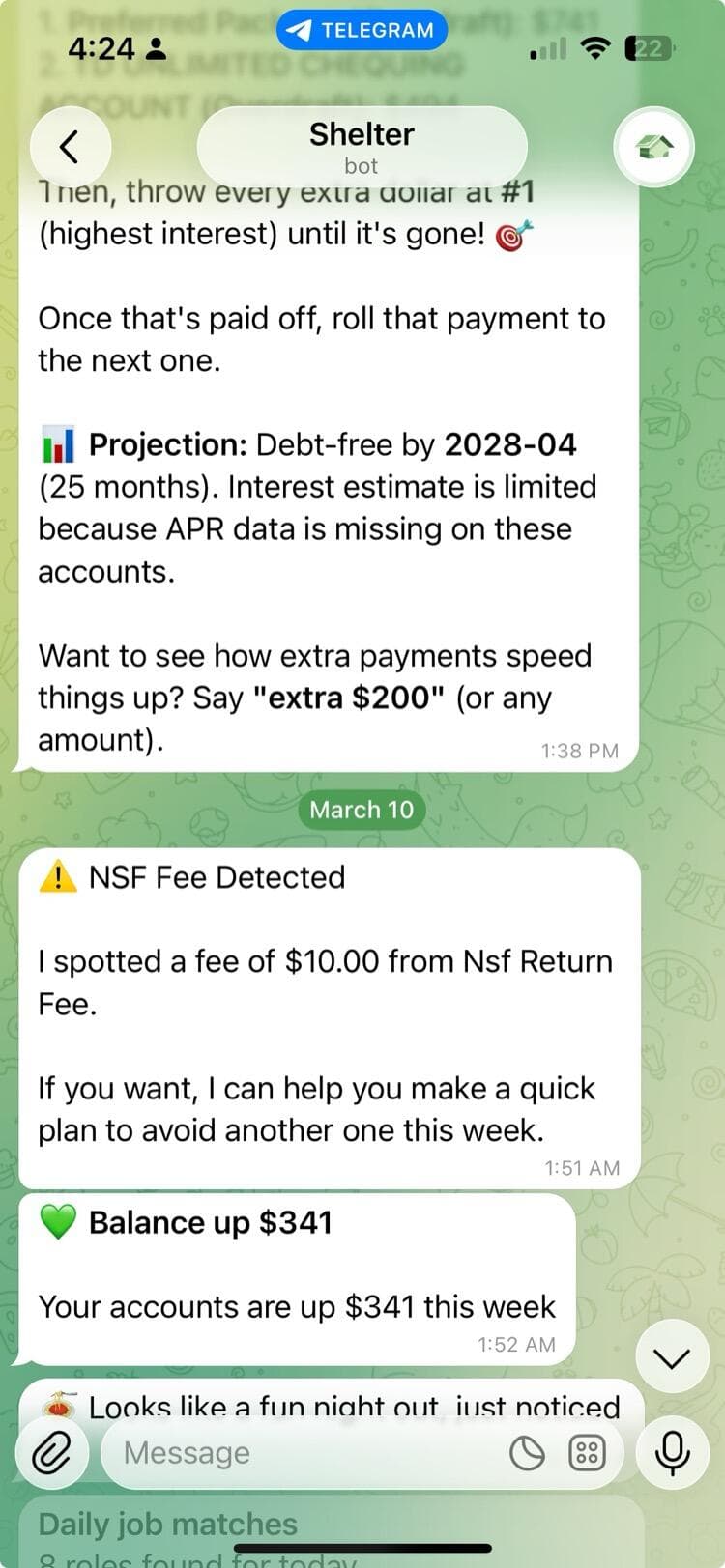
If you're living paycheck to paycheck or managing irregular gig income, staying on top of bills can feel like playing financial whack-a-mole. This comprehensive guide reveals proven strategies to track every payment, predict cash flow gaps, and eliminate surprise overdraft fees that can derail your budget.
Essential Bill Tracking Setup Strategies
Create a Master Bill Calendar
Build a visual calendar showing every bill's due date, amount, and payment method to spot potential cash flow conflicts before they happen.
Map Bills to Your Pay Schedule
Align bill due dates with your payday schedule, requesting date changes from creditors to match your cash flow patterns.
Set Up Account Balance Alerts
Configure low balance notifications 3-5 days before major bills are due to prevent overdraft surprises.
Separate Fixed vs Variable Expenses
Track recurring bills (rent, utilities) separately from variable costs (groceries, gas) to predict minimum monthly outflow.
Use Bill Due Date Staggering
Spread bill due dates throughout the month to avoid clustering payments and creating cash flow bottlenecks.
Create Bill Payment Buffer Days
Set personal due dates 2-3 days before actual due dates to account for processing delays and weekend banking closures.
Track Seasonal Bill Variations
Monitor utility bills and other seasonal expenses to predict higher costs during peak months and plan accordingly.
Document Payment Confirmation Numbers
Keep a log of payment confirmations and transaction IDs to resolve disputes and track successful payments.
Set Up Grace Period Tracking
Note each bill's grace period and late fee structure to prioritize payments and minimize penalty costs.
Monitor Bill Amount Changes
Track when bills increase or decrease to adjust your budget forecasting and catch billing errors early.
Use Color-Coded Priority System
Assign colors to bills based on urgency (red for essentials, yellow for important, green for flexible) for quick visual prioritization.
Create Emergency Bill Fund
Maintain a small buffer fund specifically for bill payments to handle timing mismatches between income and expenses.
Track Partial Payment Options
Identify which creditors accept partial payments without penalties to manage cash flow during tight periods.
Monitor Autopay Account Balances
Check account balances 3 days before autopay dates to ensure sufficient funds and prevent overdraft fees.
Document Bill Negotiation Results
Keep records of successful bill negotiations, payment plan agreements, and creditor contact information for future reference.
Digital Tools and App Integration
Choose Multi-Account Bill Trackers
Select apps that connect to checking, savings, and credit accounts to provide complete bill payment visibility across all finances.
Set Up Smart Notification Timing
Configure app alerts 7 days, 3 days, and 1 day before due dates to allow time for account transfers and payment processing.
Use Receipt Scanning Features
Leverage apps that scan and categorize bill receipts automatically to reduce manual entry and improve tracking accuracy.
Enable Bank Integration Syncing
Connect bill tracking apps to your bank accounts for real-time balance updates and automatic payment verification.
Utilize Recurring Payment Detection
Use apps that automatically identify recurring charges and subscriptions from bank transactions to catch forgotten bills.
Set Up Cross-Platform Synchronization
Choose tools that sync across phone, computer, and tablet to access bill information from any device.
Configure Spending Category Alerts
Set up notifications when spending in bill categories (utilities, rent) approaches monthly limits to prevent budget overruns.
Use Bill Forecasting Features
Leverage apps that predict future bill amounts based on historical data to improve cash flow planning accuracy.
Enable Location-Based Reminders
Set up geofenced alerts that remind you to pay bills when you're near specific locations like banks or ATMs.
Integrate Calendar Applications
Sync bill due dates with your primary calendar app to see payment obligations alongside work and personal commitments.
Use Voice Command Bill Entry
Utilize voice-to-text features to quickly add new bills or update payment amounts while on the go.
Set Up Backup Data Export
Regularly export bill tracking data to prevent loss if apps discontinue service or accounts get compromised.
Configure Multi-User Sharing
Set up bill sharing features for roommates or partners to coordinate payments and avoid duplicate charges.
Use Bill Photo Attachment
Attach photos of physical bills and statements to digital entries for complete payment documentation and dispute resolution.
Enable Biometric Security
Activate fingerprint or face ID protection for bill tracking apps containing sensitive financial information and account details.
Cash Flow Optimization Techniques
Calculate Weekly Cash Flow Gaps
Identify specific weeks when bill payments exceed income to arrange temporary transfers or adjust payment timing.
Implement Bill Payment Laddering
Sequence bill payments to match your income frequency, paying weekly bills after weekly pay and monthly bills after monthly income.
Use the 50/30/20 Bill Allocation
Allocate 50% of income to essential bills immediately upon receiving payment to prevent accidental spending on necessities.
Track Bill-to-Income Ratios
Monitor what percentage of income goes to each bill category to identify areas for negotiation or reduction.
Create Bill Payment Windows
Establish specific days each week for paying bills to create routine and ensure adequate account balances.
Use Envelope Method for Bills
Allocate cash or separate account funds for each bill category immediately after payday to prevent overspending.
Monitor Float Time Optimization
Track how long different payment methods take to clear and use this timing to maximize available cash flow.
Implement Bi-Weekly Bill Splitting
Split large monthly bills into bi-weekly payments to align with bi-weekly paychecks and reduce cash flow strain.
Track Seasonal Cash Flow Patterns
Analyze seasonal income variations (holiday gig work, tax refunds) to plan bill payment strategies throughout the year.
Use Bill Consolidation Timing
Time consolidated payments (like credit card bills covering multiple expenses) to match your largest income deposits.
Create Minimum Balance Buffers
Maintain minimum account balances equal to your highest single bill to prevent overdrafts from autopay timing issues.
Track Payment Processing Delays
Document how long each creditor takes to process payments to avoid late fees from processing delays.
Use Income Smoothing Techniques
Set aside portions of irregular gig income during high-earning periods to cover bills during slower periods.
Optimize Payment Method Timing
Choose payment methods (ACH, debit, credit) based on processing speed and your cash flow needs for each bill.
Track Overdraft Recovery Time
Monitor how long it takes to recover from overdrafts to better predict when accounts will be available for bill payments.
Subscription and Recurring Payment Management
Conduct Monthly Subscription Audits
Review bank statements monthly to identify all recurring charges and cancel unused or forgotten subscriptions immediately.
Use Dedicated Subscription Cards
Put all subscriptions on one specific credit or debit card to centralize tracking and make cancellation easier.
Track Free Trial Expiration Dates
Create alerts for free trial endings 3-5 days before billing starts to decide whether to continue or cancel services.
Negotiate Annual vs Monthly Billing
Calculate whether annual subscriptions offer savings and if you can cash flow the larger payment for better value.
Use Subscription Pause Features
Identify services offering temporary pauses instead of cancellation to manage costs during tight financial periods.
Share Subscription Costs
Split family plans and shared subscriptions with trusted friends or family members to reduce individual costs.
Track Promotional Pricing Ends
Monitor when promotional rates expire and regular pricing begins to budget for increased costs or plan cancellation.
Use Prepaid Subscription Cards
Purchase gift cards for subscriptions to control spending and avoid unexpected charges when budgets are tight.
Set Subscription Spending Limits
Establish maximum monthly amounts for subscription services and cancel lowest-priority services when approaching limits.
Track Usage vs Cost Analysis
Monitor actual usage of subscriptions against their cost to identify services that aren't providing sufficient value.
Use Subscription Rotation Strategy
Subscribe to different services seasonally, keeping only 2-3 active subscriptions at a time and rotating based on usage patterns.
Create Subscription Cancellation Calendar
Schedule regular review dates to evaluate and potentially cancel subscriptions based on changing needs and financial situations.
Use Virtual Card Numbers
Utilize virtual credit card numbers for subscriptions to easily cancel payments without affecting your main card account.
Track Student and Professional Discounts
Monitor eligibility for discounted subscription rates and switch to promotional pricing when available to reduce costs.
Set Up Subscription Spending Alerts
Configure notifications when subscription spending exceeds predetermined monthly limits to prevent budget overruns.
Take Control of Your Finances
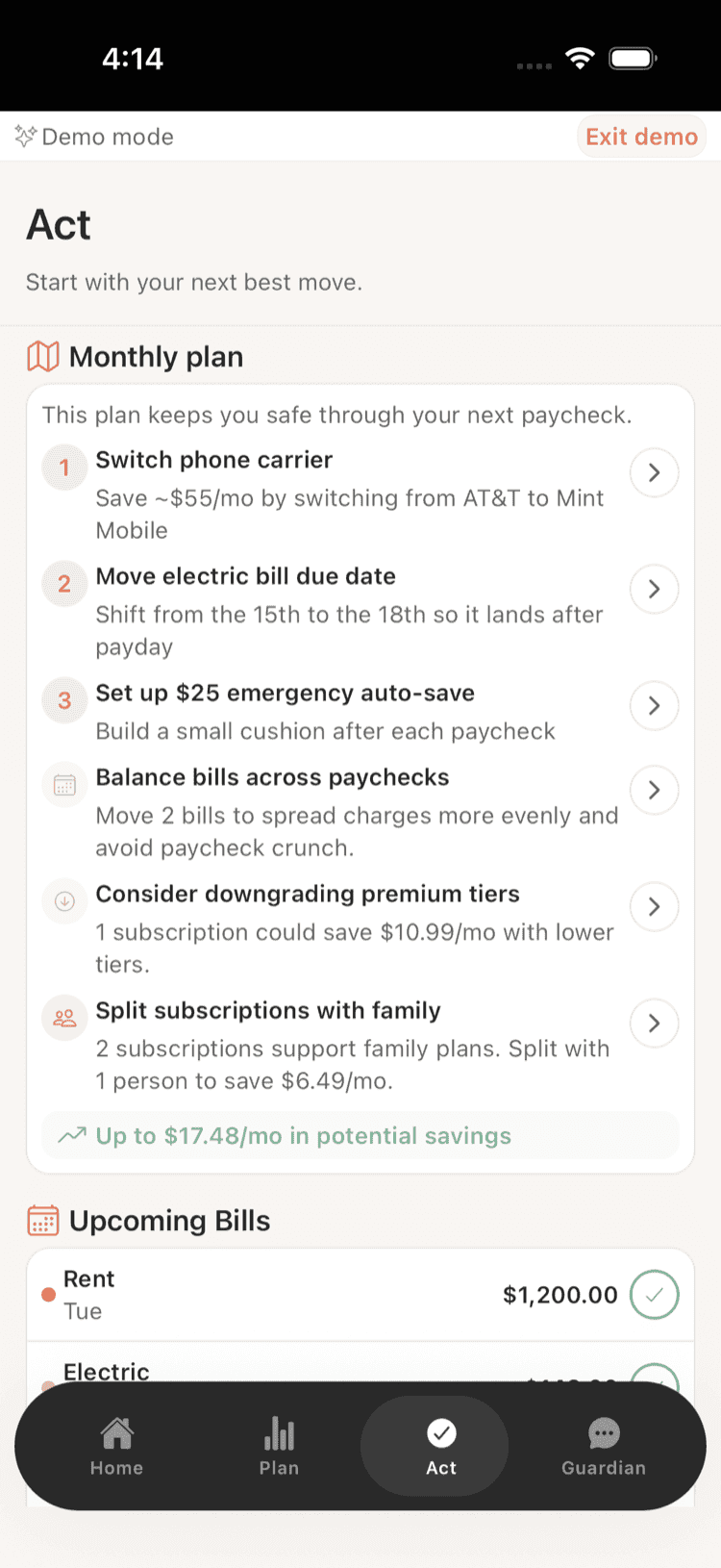
Shelter gives you a clear picture of your cash flow, tracks your bills and subscriptions, and helps you avoid overdraft fees -- all without the stress of traditional budgeting. Connect your accounts in minutes and let Shelter do the heavy lifting.
Download Shelter and start managing your money smarter today.
Take control of your cash flow
Shelter connects to your bank, forecasts your balance 30 days out, and alerts you before problems happen.