Missing bill payments and overdraft fees can devastate tight budgets, especially for gig workers and young professionals living paycheck to paycheck. This comprehensive checklist covers everything you need to track bills effectively, prevent costly surprises, and maintain control over your cash flow in 2026.
Essential Bill Tracking Setup
-
Download a dedicated bill tracking app with bank sync -- Choose apps like Prism, Mint Bills, or Truebill that automatically pull your bills from email and bank accounts. Manual entry apps fail when you're juggling multiple income sources.
-
Connect all checking accounts and credit cards -- Link every account where bills are paid from, including business accounts for gig workers. Missing accounts create blind spots in your cash flow visibility.
-
Set up email forwarding for bill notifications -- Forward all bill emails to your tracking app's designated email address. This captures bills that don't sync automatically from your accounts.
-
Create separate categories for fixed vs variable bills -- Group rent, insurance, and subscriptions separately from utilities that fluctuate. This helps predict your minimum monthly obligations.
-
Enable push notifications 3-7 days before due dates -- Set reminders based on your pay cycle frequency. Weekly earners need shorter lead times than monthly salary workers.
-
Add irregular bills like car registration and taxes -- Input annual, semi-annual, and quarterly bills with exact amounts and dates. These surprise bills cause the most overdraft damage.
-
Set up calendar integration with bill due dates -- Sync your bill tracker to Google Calendar or Apple Calendar to see payment obligations alongside work schedules and payday dates.
-
Configure overdraft alerts for all connected accounts -- Set up low balance warnings at $100, $50, and $25 thresholds. Gig workers with irregular income need earlier warnings than salaried employees.
-
Create a master list of all subscription services -- Audit bank and credit card statements for recurring charges. Include streaming services, apps, gym memberships, and forgotten trial subscriptions.
-
Enable automatic bill pay for fixed amounts only -- Auto-pay rent, insurance, and loan minimums, but manually pay utilities and credit cards to maintain spending control.
-
Set up a dedicated bill-paying day each week -- Choose the same day each week to review upcoming bills and available funds. Consistency prevents forgotten payments.
-
Configure spending alerts before major bill clusters -- Set warnings when discretionary spending approaches limits during weeks with high bill volumes. Prevents end-of-month cash crunches.
-
Link multiple income sources to cash flow projections -- Connect gig apps, freelance payments, and traditional paychecks to see complete income vs expenses picture.
-
Set up shared bill tracking for roommates or partners -- Use apps like Splitwise integrated with bill trackers to manage shared expenses and prevent missed contributions.
-
Create backup payment methods for each critical bill -- Assign secondary payment sources for rent, utilities, and insurance in case primary accounts have insufficient funds.
Cash Flow Forecasting Integration
-
Map bill due dates against confirmed payday schedules -- Create a visual calendar showing when money comes in versus when bills are due. Identify potential timing gaps before they cause overdrafts.
-
Calculate your minimum survival budget baseline -- Add up all non-negotiable monthly bills to determine the absolute minimum income needed. This is your financial floor for gig work planning.
-
Set up rolling 30-day cash flow projections -- Track projected income vs scheduled bills for the next month. Update weekly as gig income fluctuates and new opportunities arise.
-
Create bill payment priority rankings -- Rank bills by consequences of late payment: rent first, utilities second, credit cards third. Know which bills to prioritize during cash shortfalls.
-
Track grace periods and late fee schedules -- Document each bill's grace period and late fee amount. Some utilities allow 10-day delays while credit cards charge immediately.
-
Monitor bill amount trends and seasonal variations -- Track how electricity, gas, and other variable bills change seasonally. Plan for higher heating costs in winter months.
-
Set up emergency fund targets based on bill totals -- Calculate emergency savings as 1-3 months of your tracked monthly bill obligations rather than generic income multiples.
-
Create weekly income targets to cover upcoming bills -- Break down bill obligations into weekly earning goals for gig workers. If you need $800 next week for bills, plan gig hours accordingly.
-
Track payment confirmation numbers and dates -- Record confirmation numbers for all bill payments to resolve disputes quickly. Screenshot online payment confirmations immediately.
-
Monitor automatic payment failures and retry dates -- Track when autopay attempts fail and when they'll retry. Failed autopays often retry 3-5 days later, creating second overdraft risks.
-
Calculate true hourly earnings after bill obligations -- Divide your bill requirements by available working hours to see your minimum effective hourly rate needs across all gig work.
-
Set up bill clustering strategies around pay dates -- Request due date changes to cluster bills right after your highest income days. Pay everything when cash flow is strongest.
-
Track bill payment timing vs bank processing delays -- Learn how long each payment method takes to process. ACH transfers take 2-3 days while debit cards are immediate.
-
Monitor credit utilization timing around bill payments -- Track when credit card payments post versus statement closing dates to optimize credit scores while managing cash flow.
-
Create contingency payment plans for income shortfalls -- Develop specific action plans for 25%, 50%, and 75% income reductions. Know exactly which bills to delay and which to prioritize.
Subscription Management and Hidden Costs
-
Audit all recurring charges monthly using bank statements -- Review every automatic charge across all accounts and cards. Free trials often convert to paid subscriptions without clear notifications.
-
Use subscription tracking apps like Truebill or Honey -- These apps scan your accounts for subscriptions and help cancel unwanted ones. They often find forgotten services costing $200+ annually.
-
Set calendar reminders before free trial expirations -- Add trial end dates to your calendar with 2-day advance warnings. Cancel before billing starts if you don't plan to continue.
-
Negotiate annual payment discounts for essential subscriptions -- Many services offer 10-20% discounts for annual payments. Calculate if the upfront cost saves money and improves cash flow predictability.
-
Track seasonal subscription patterns and pause unused services -- Pause gym memberships during busy work periods or streaming services you don't use. Many allow temporary suspensions.
-
Monitor subscription price increases and usage patterns -- Services often raise prices with minimal notice. Track actual usage to determine if increased costs justify continued subscription.
-
Consolidate similar services to reduce total costs -- Choose one streaming service instead of three, or one productivity app instead of multiple overlapping tools. Focus spending on most-used services.
-
Set spending limits on app store purchases and subscriptions -- Configure spending limits on iPhone/Android app stores to prevent accidental subscription sign-ups during app downloads.
-
Use virtual credit cards for subscription management -- Services like Privacy.com let you create spending limits and cancellation dates for subscriptions, providing better control than regular cards.
-
Track membership benefits utilization vs costs -- Calculate if you're actually saving money with Amazon Prime, Costco memberships, or other paid benefits programs based on usage data.
-
Set up family sharing plans to reduce per-person costs -- Share Netflix, Spotify, Apple subscriptions with family members or trusted friends to split costs legally through official family plans.
-
Monitor business expense subscriptions for tax deduction tracking -- Separate business-related subscriptions for gig work from personal entertainment to maximize tax deductions.
-
Create subscription budget categories with monthly limits -- Allocate specific monthly amounts for entertainment, productivity, and business subscriptions. Stop adding new services when limits are reached.
-
Use student discounts and promotional rates where eligible -- Many services offer student, military, or first-responder discounts. Check eligibility annually as promotional rates often require renewal.
-
Track subscription cancellation procedures and deadlines -- Document how to cancel each subscription and required notice periods. Some services require 30-day advance notice or phone calls to cancel.
Overdraft Prevention Strategies
-
Enable account balance notifications at multiple thresholds -- Set alerts at $200, $100, $50, and $25 remaining. Higher earners need different thresholds than those living paycheck to paycheck.
-
Link savings accounts for automatic overdraft protection -- Connect savings to checking for automatic transfers when balances run low. This costs less than overdraft fees but requires maintaining savings.
-
Track pending transactions and processing delays -- Monitor which transactions are pending versus posted. Pending charges reduce available balance but don't show in simple balance checks.
-
Use banks with no overdraft fees or low-cost alternatives -- Switch to banks like Chime, Ally, or credit unions with minimal overdraft fees. Traditional banks charge $35+ per overdraft.
-
Set up automatic transfers from gig work accounts -- Transfer gig earnings immediately to checking accounts designated for bills. Don't let money sit in app wallets where you might forget about it.
-
Monitor weekend and holiday processing delays -- Banks don't process transactions on weekends/holidays, creating timing gaps. Plan bill payments accounting for 2-3 day processing delays.
-
Disable overdraft protection on non-essential accounts -- Turn off overdraft on accounts used for discretionary spending. It's better to have cards declined than pay $35 fees on small purchases.
-
Track your bank's overdraft fee policies and limits -- Learn your bank's daily overdraft limits and fee structures. Some cap fees at 3-4 per day while others charge unlimited fees.
-
Use envelope budgeting to pre-allocate bill money -- Separate bill money into dedicated accounts or budget categories immediately when income arrives. Treat it as unavailable for other spending.
-
Monitor direct deposit timing variations -- Track exactly when different income sources hit your accounts. Gig payments, freelance checks, and regular paychecks have different timing patterns.
-
Set up emergency credit lines before you need them -- Apply for small personal lines of credit or credit card cash advance options while income is stable. Emergency access prevents overdrafts.
-
Track merchant processing time variations -- Learn which merchants process payments immediately versus holding charges for days. Gas stations and hotels often pre-authorize larger amounts.
-
Use payment timing strategies for large bills -- Pay large bills like rent right after paydays when account balances are highest. Schedule smaller bills throughout the month.
-
Monitor automatic payment retry patterns -- Track when failed autopay attempts retry and adjust account funding accordingly. Multiple retry attempts can cause cascading overdraft fees.
-
Create overdraft recovery action plans -- Develop specific steps for overdraft situations: which income to accelerate, which expenses to delay, and how to rebuild account buffers quickly.
Take Control of Your Finances
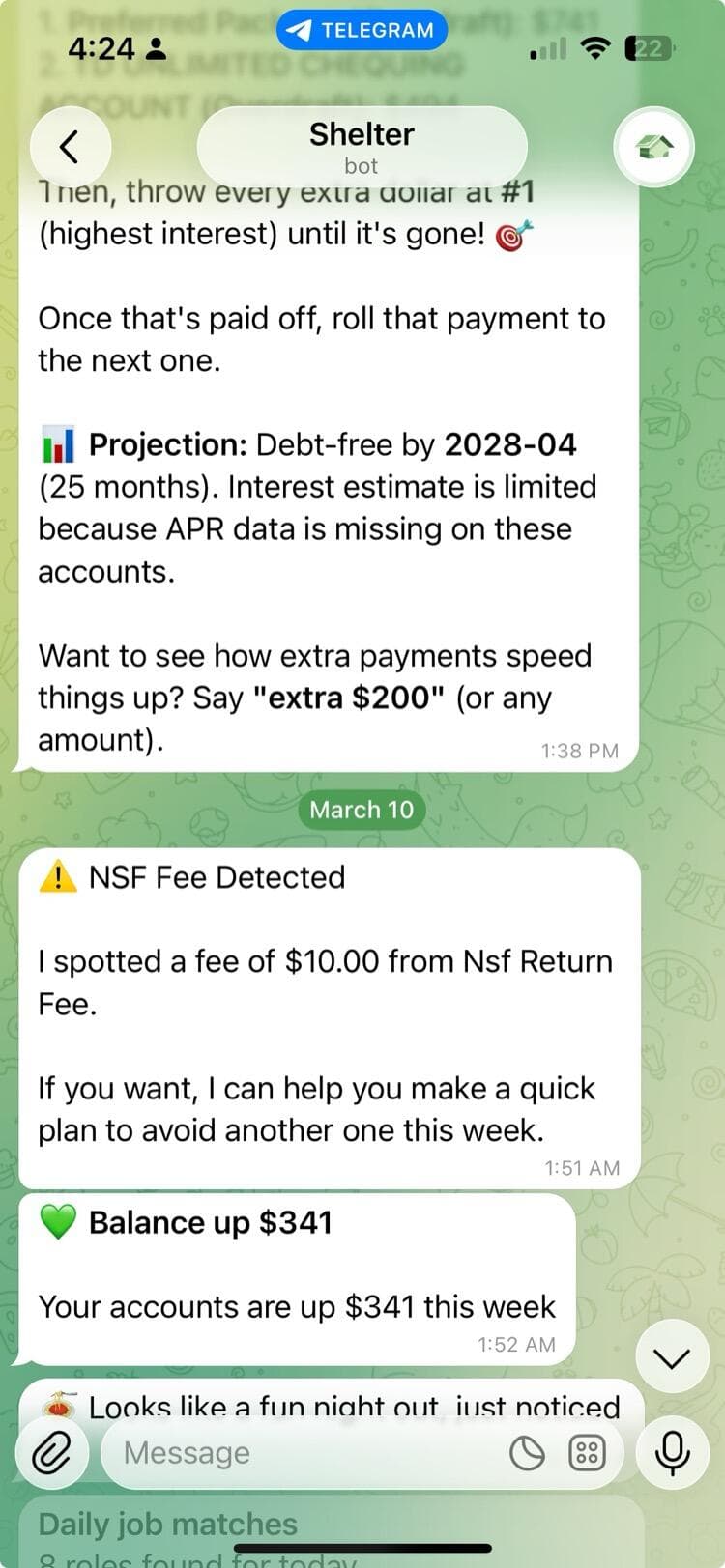
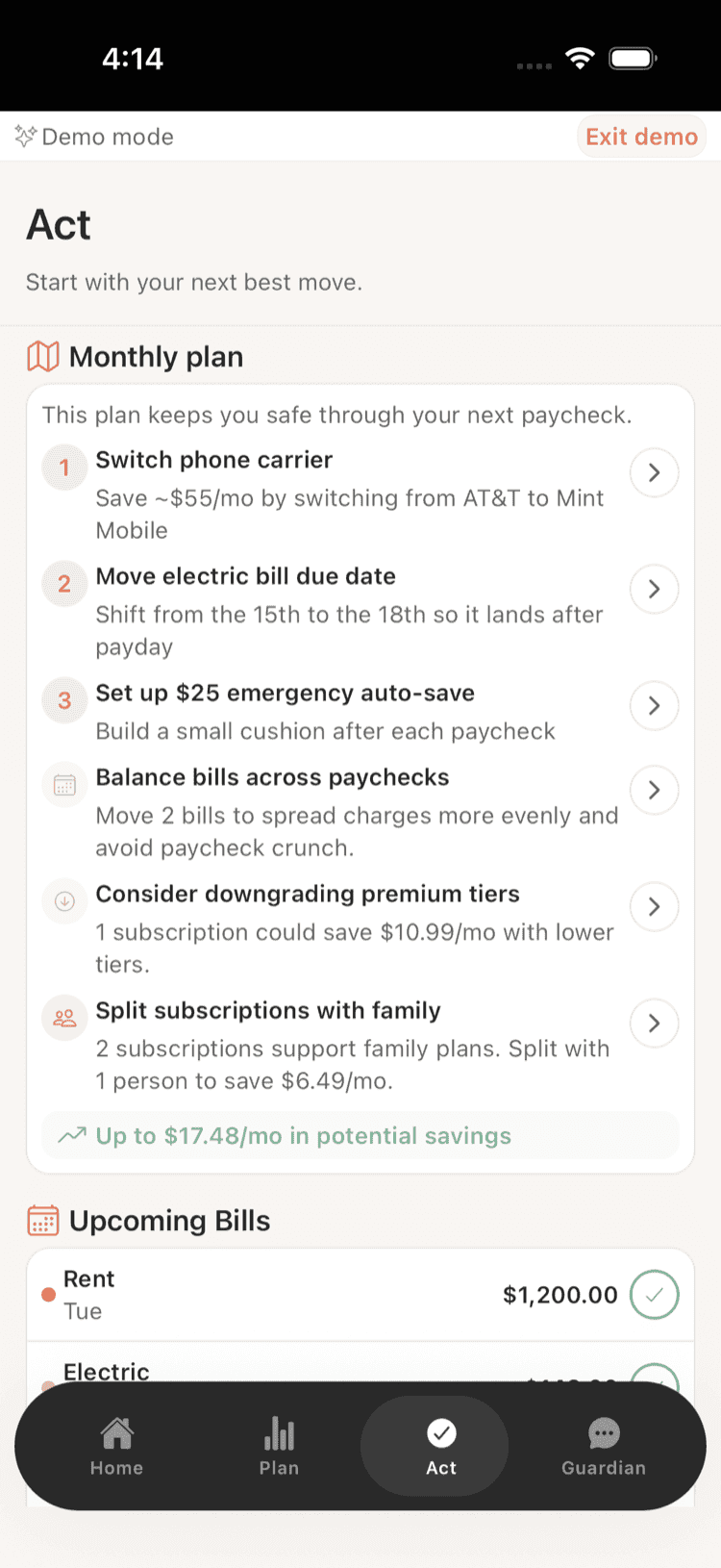
Shelter gives you a clear picture of your cash flow, tracks your bills and subscriptions, and helps you avoid overdraft fees -- all without the stress of traditional budgeting. Connect your accounts in minutes and let Shelter do the heavy lifting.
Download Shelter and start managing your money smarter today.
Take control of your cash flow
Shelter connects to your bank, forecasts your balance 30 days out, and alerts you before problems happen.