Young professionals and gig workers face unique cash flow challenges, from irregular income to unexpected overdraft fees that can derail entire budgets. These 100 bill tracking strategies help you gain complete visibility into upcoming expenses, prevent costly timing mismatches, and build financial confidence even when living paycheck to paycheck.
Bill Calendar & Scheduling Mastery
Map Your Pay-to-Bill Timeline
Create a visual timeline showing when each paycheck arrives versus when bills are due to identify dangerous gaps.
Use Color-Coded Bill Categories
Assign different colors to fixed bills, variable expenses, and subscriptions in your calendar for instant visual recognition.
Set 7-Day Bill Warnings
Configure alerts exactly one week before each bill is due to ensure you have time to move money between accounts.
Create Payday-Based Bill Groups
Cluster bills by which paycheck will cover them, making it easier to allocate funds as soon as you're paid.
Track Bill Amount Fluctuations
Monitor how much utilities and variable bills change month-to-month to better predict future payments.
Schedule Weekend Bill Reviews
Block 30 minutes every Sunday to review upcoming bills for the week and ensure sufficient account balances.
Use Recurring Calendar Events
Set up repeating calendar appointments for each bill with the exact amount and account it draws from.
Build a Bill Timing Buffer
Aim to pay bills 2-3 days before they're due to account for processing delays and avoid late fees.
Track First-Time Bill Dates
When you sign up for new services, immediately note when the first bill will arrive to avoid surprise charges.
Create Emergency Bill Alerts
Set up same-day notifications for bills you might have forgotten when your account balance is running low.
Use Multiple Reminder Methods
Combine phone notifications, email alerts, and physical calendar entries to ensure you never miss important dates.
Schedule Mid-Month Check-ins
Review your bill calendar every 15th to catch any missed entries or upcoming surprises.
Track Seasonal Bill Changes
Note when utility bills typically spike (summer AC, winter heating) to prepare for higher amounts.
Map Bills to Bank Accounts
Document which checking or savings account each bill draws from to prevent overdrafts from the wrong account.
Create Bill Day Checklists
Make a checklist of steps to complete before each major bill payment (check balance, transfer funds, confirm amount).
Use Bill Clustering Strategies
Group multiple bills to be paid on the same day to simplify your payment schedule and reduce mental load.
Track Payment Confirmation Numbers
Keep a log of confirmation numbers for each bill payment in case you need to dispute charges or prove payment.
Monitor Bill Due Date Drift
Some bills shift due dates slightly each month - track these patterns to avoid unexpected timing issues.
Set Up Backup Payment Methods
Have secondary payment methods ready and documented for each bill in case your primary account has issues.
Create Visual Bill Dashboards
Use apps or spreadsheets that show all upcoming bills in a single visual interface for quick status checks.
Automated Tracking Systems
Connect Bank Accounts to Bill Apps
Link your checking accounts to bill tracking apps that automatically detect recurring payments and predict future bills.
Use Email Bill Scanning
Forward all bill emails to a dedicated address that apps can scan to automatically extract due dates and amounts.
Set Up Smart Notifications
Configure notifications that only alert you when your account balance is too low to cover upcoming bills.
Enable Transaction Categorization
Use banking apps that automatically categorize bill payments to help you track spending patterns over time.
Automate Recurring Bill Detection
Use tools that analyze your transaction history to automatically identify and track recurring payments.
Connect Credit Card Accounts
Link all credit cards to your bill tracker to monitor bills that auto-pay from different cards.
Use Receipt Scanning Apps
Scan physical bills and receipts that get automatically sorted into your digital bill tracking system.
Set Up Balance Threshold Alerts
Get notified when your account balance drops below the total of your upcoming bills for the next 7 days.
Enable Subscription Monitoring
Use apps that automatically detect and track all subscription services, including free trials about to convert.
Automate Bill Amount Updates
Choose tools that automatically update bill amounts when they change, so you don't work with outdated information.
Use Calendar Integration APIs
Connect bill tracking apps to your phone's calendar so bill due dates appear alongside your other appointments.
Enable Cross-Platform Syncing
Ensure your bill data syncs across all devices so you can check upcoming bills from phone, tablet, or computer.
Set Up Automated Bill Grouping
Use apps that automatically group bills by category, due date, or payment method for easier management.
Connect to Employer Payroll Systems
If possible, link your payroll information so the app knows exactly when money will hit your account.
Use Smart Home Bill Tracking
Connect smart home devices that can announce upcoming bills or display bill information on smart displays.
Enable Spending Pattern Analysis
Use tools that learn your spending patterns and predict when irregular bills (like car repairs) might occur.
Automate Bill vs Income Matching
Set up systems that automatically match upcoming bills to expected income sources and flag potential shortfalls.
Connect to Gig Economy Platforms
Link Uber, DoorDash, or freelance platforms so your irregular income is factored into bill payment planning.
Use Automated Overdraft Predictions
Enable features that predict potential overdrafts based on upcoming bills and current account balances.
Set Up Emergency Contact Alerts
Configure the system to text a trusted friend or family member if you're at risk of missing critical bill payments.
Cash Flow Optimization
Negotiate Staggered Due Dates
Contact utility companies and creditors to spread bill due dates throughout the month instead of clustering them.
Build Micro-Savings for Bills
Set aside small amounts daily (even $2-5) specifically for upcoming bills to avoid large payment shocks.
Use the Envelope Method Digitally
Create separate savings 'envelopes' for each major bill category and automatically allocate funds when paid.
Time Bill Payments with Paydays
Schedule all possible bills to be paid within 2-3 days of receiving each paycheck to maximize available time.
Create Bill Payment Buffers
Always keep one extra bill payment worth of money in your account as a buffer against timing mismatches.
Use Bi-Weekly Payment Strategies
Split monthly bills into two smaller bi-weekly payments to better align with bi-weekly paychecks.
Leverage Grace Periods Strategically
Map out which bills have grace periods and use them strategically when cash flow is tight.
Prioritize Bills by Consequences
Create a hierarchy of which bills to pay first based on late fees, service shutoffs, and credit impact.
Use Float Time Effectively
Understand how long each bill payment method takes to process and use that time to manage cash flow.
Negotiate Payment Plan Options
Set up payment plans for large bills that let you split them into smaller, more manageable chunks.
Track Minimum vs Full Payments
Know exactly what the minimum payment is for each bill so you can adjust during tight cash flow periods.
Use Cashback Credit Cards Strategically
Pay bills with cashback credit cards, then immediately pay off the card to earn rewards without interest.
Build Income Smoothing Systems
For irregular income, calculate weekly minimums needed for bills and save any excess during high-earning periods.
Use Automatic Savings Transfers
Set up automatic transfers to savings accounts designated for specific bills immediately after each payday.
Monitor Spending Velocity
Track how quickly you spend money after payday to ensure bill money doesn't get used for other expenses.
Create Emergency Bill Funds
Build separate emergency funds specifically for unexpected bill increases (like surprise medical bills or utility spikes).
Use High-Yield Savings for Bill Money
Keep money earmarked for bills in high-yield savings accounts so it earns interest while waiting to be used.
Track Bill-to-Income Ratios
Monitor what percentage of your income goes to fixed bills and adjust lifestyle if it creeps above 50%.
Use Bill Averaging Programs
Sign up for utility averaging programs that spread seasonal costs throughout the year for more predictable payments.
Create Cash Flow Forecasts
Build 3-month rolling forecasts that show when you'll have bill payment challenges so you can prepare in advance.
Subscription & Recurring Payment Control
Audit All Subscriptions Monthly
Review bank and credit card statements every month to identify all recurring charges and cancel unused services.
Use Subscription Tracking Apps
Install apps that automatically detect and track all your subscriptions, including free trials about to convert to paid.
Set Free Trial Reminders
Create calendar alerts 2 days before free trials end so you can cancel before being charged.
Use Dedicated Subscription Cards
Put all subscriptions on one specific credit card or debit card to make tracking and management easier.
Negotiate Annual vs Monthly Rates
Compare annual subscription rates to monthly ones - sometimes paying annually saves significant money.
Track Subscription Price Increases
Monitor when subscriptions increase prices and decide whether to downgrade, cancel, or find alternatives.
Use Family Plan Strategies
Share family plans with friends or relatives to reduce per-person costs for streaming, music, and cloud storage.
Set Subscription Spending Limits
Decide on a total monthly budget for all subscriptions combined and stick to it by prioritizing most valuable services.
Use Pause Options When Available
Some services allow you to pause subscriptions during tight months instead of canceling completely.
Track Usage vs Cost for Each Service
Monitor how often you actually use each subscription to determine if you're getting good value for money spent.
Bundle Services When Beneficial
Look for bundle deals that combine multiple services you need for less than individual subscriptions would cost.
Use Student or Military Discounts
Take advantage of available discounts for students, military, or other qualifying groups to reduce subscription costs.
Set Up Subscription Rotation
Rotate seasonal subscriptions - keep Netflix in winter, cancel for summer outdoor activities, then reverse.
Monitor App Store Subscriptions
Regularly check subscriptions managed through app stores, as these are often forgotten and continue charging.
Use Prepaid Options When Available
Some services offer discounted prepaid options that help you avoid surprise monthly charges.
Track Subscription Renewal Dates
Keep a calendar of when annual subscriptions renew so you can evaluate and potentially cancel before the next charge.
Use Gift Cards for Subscriptions
Buy discounted gift cards for services you use regularly to reduce the effective monthly cost.
Set Up Subscription Alerts
Configure bank alerts that notify you whenever a subscription charge hits your account.
Research Free Alternatives
Regularly research free alternatives to paid subscriptions you might be able to switch to without losing functionality.
Use Promotional Rate Tracking
Keep track of promotional rates and their expiration dates so you can cancel or renegotiate before prices jump.
Emergency Bill Management
Create Bill Emergency Action Plans
Document exactly what to do when you can't pay a bill: who to call, what options are available, and deadlines to meet.
Know Your Hardship Program Options
Research hardship programs offered by utility companies, credit cards, and loan servicers before you need them.
Build Minimum Payment Lists
Create lists of absolute minimum payments for each bill to keep services active during financial emergencies.
Establish Bill Payment Priorities
Rank bills by consequences of non-payment: housing, utilities, car payment, then credit cards and other debts.
Use Extension Request Scripts
Prepare polite scripts for calling companies to request payment extensions or due date changes during tight periods.
Track Grace Period Details
Document exactly how many days of grace period each company offers and any fees associated with late payments.
Set Up Emergency Fund Access
Ensure you can quickly access emergency savings, including knowing transfer times and any access limitations.
Know Your Disconnection Timelines
Understand exactly when utilities, phone, or internet service will be disconnected for non-payment in your area.
Use Automated Overdraft Alerts
Set up immediate alerts when accounts go negative so you can address overdrafts before fees multiply.
Create Bill Restructuring Plans
Have plans ready for how to restructure bill payments if income suddenly drops or unexpected expenses arise.
Build Community Resource Lists
Research local assistance programs, food banks, and utility assistance that can help during financial crises.
Use Partial Payment Strategies
Learn which companies accept partial payments and how to communicate payment plans that work with your cash flow.
Track Credit Impact Timelines
Know exactly when late payments will be reported to credit bureaus for different types of bills.
Create Quick Cash Options List
Maintain a list of ways to generate quick cash: gig work, items to sell, people who might lend money short-term.
Use Payment App Advances
Understand how apps like Earnin or Dave work to provide paycheck advances when you need bill money fast.
Know Your Bank's Overdraft Policies
Understand your bank's overdraft fees, coverage policies, and any grace periods they offer for bringing accounts positive.
Set Up Emergency Contact Networks
Identify family or friends who might help with emergency bill payments and discuss boundaries in advance.
Use Low-Income Assistance Programs
Apply for LIHEAP, SNAP, and other assistance programs that can free up money for other bills during tough times.
Track Reconnection Fees
Know what it costs to reconnect services after disconnection so you can factor these fees into payment plans.
Create Worst-Case Scenario Plans
Plan what you'll do if multiple bills can't be paid simultaneously: which to prioritize and how to minimize damage.
Take Control of Your Finances
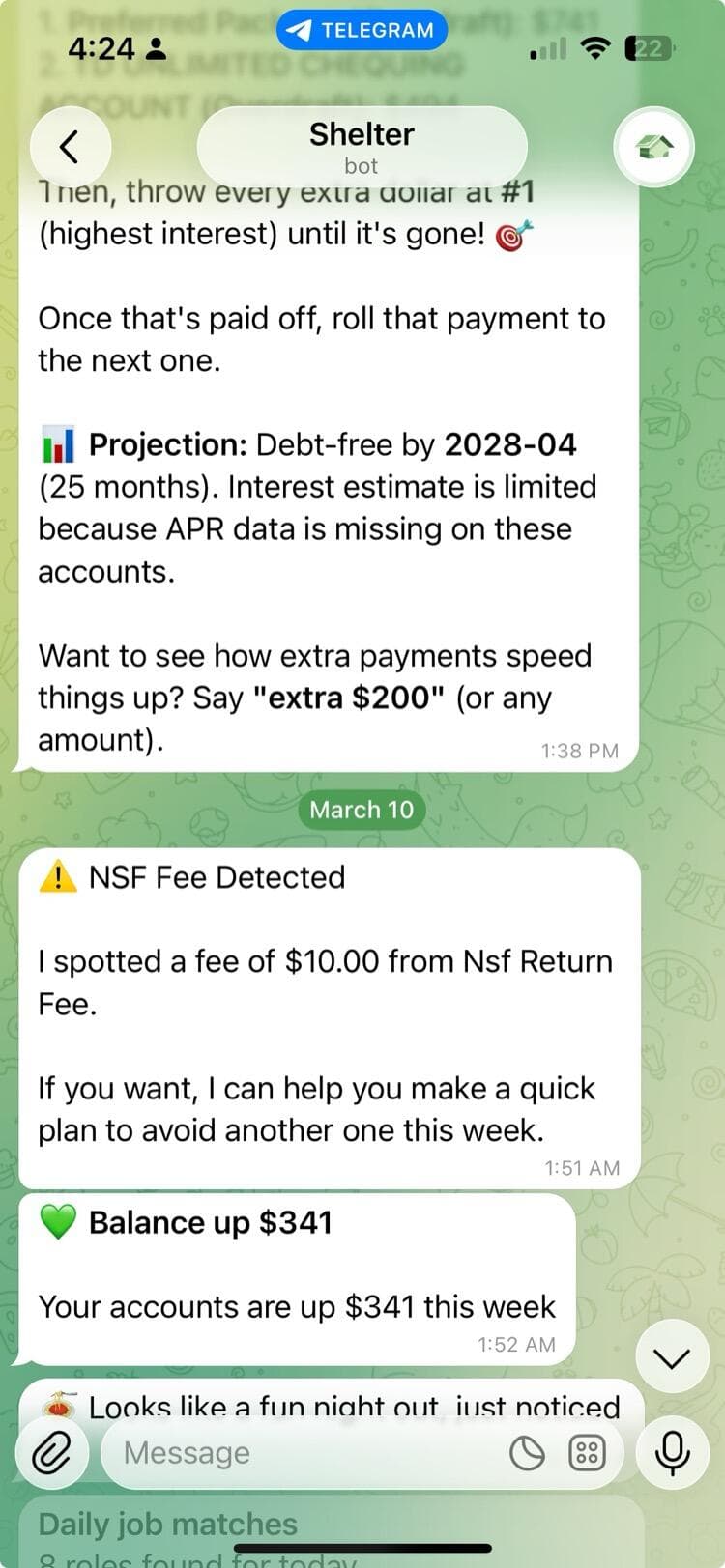
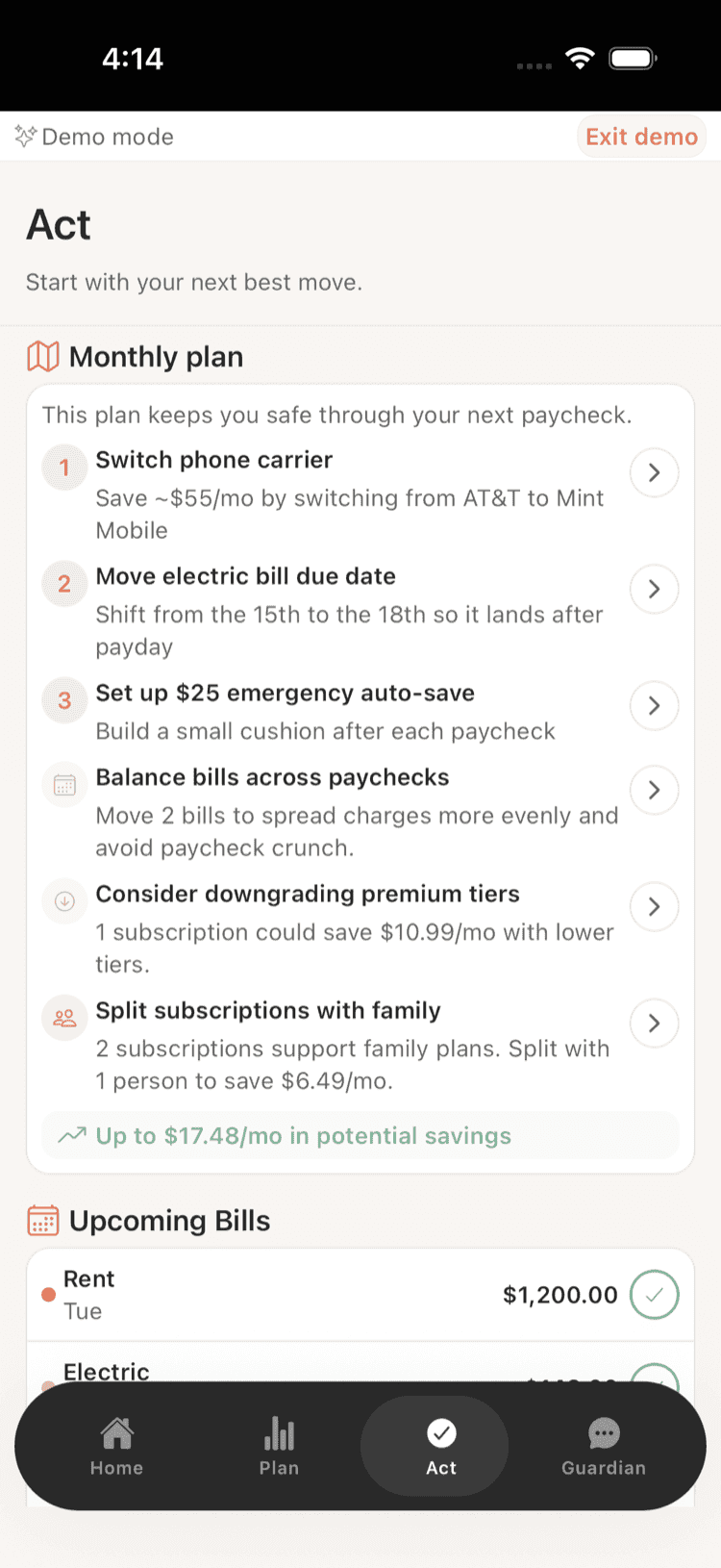
Shelter gives you a clear picture of your cash flow, tracks your bills and subscriptions, and helps you avoid overdraft fees -- all without the stress of traditional budgeting. Connect your accounts in minutes and let Shelter do the heavy lifting.
Download Shelter and start managing your money smarter today.
Take control of your cash flow
Shelter connects to your bank, forecasts your balance 30 days out, and alerts you before problems happen.