In short
Rocket Money is better if your main goal is done-for-you cancellation and bill negotiation. Shelter is better if your main goal is seeing the next 30 days clearly, reviewing cancellation options yourself, and adjusting spending targets based on forecast impact.
Rocket Money and Shelter get grouped together because both connect to your accounts and help you manage money. But they are optimized for different jobs.
Rocket Money is strongest when you want to cut waste with as little effort as possible: find subscriptions, cancel the junk, negotiate bills, and trim recurring costs.
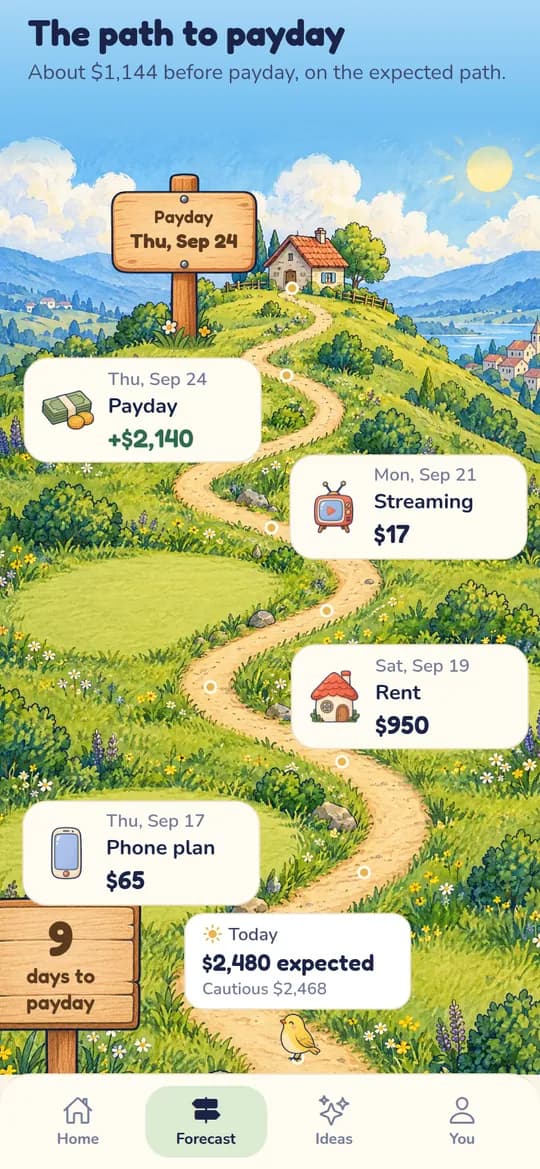
Shelter is strongest when you want forward-looking control: see what is coming, understand when cash gets tight, and know what is actually safe to spend before bills hit.
If you want the dedicated comparison pages, see Rocket Money vs Shelter and our broader Rocket Money alternative guide. This article focuses on which product is better for which kind of problem.
Where Rocket Money Wins
Rocket Money has a very clear wedge, and it is a good one.
It is better if you want:
- strong subscription detection
- done-for-you help canceling unwanted services
- bill negotiation
- a quick audit of recurring charges draining your account
That is real value. If your main frustration is "I am paying for too many things I forgot about, and I do not want to deal with cleanup myself," Rocket Money is built for that exact use case.
Shelter does not try to replace concierge-style cancellation or negotiation flows. Shelter does help users review subscriptions, open cancellation paths, and in some cases use generated negotiation scripts, but the model is guided rather than done-for-you. If full-service cleanup is the core job you are hiring an app to do, Rocket Money has the advantage.
Where Shelter Wins
Shelter is stronger when the problem is not just cost. It is timing.
A lot of financial stress is not "I spend too much in total." It is:
- my account gets tight before payday
- multiple bills land in the same week
- I do not know what is safe to spend today
- I need to adjust one category without creating a problem later this month
That is where Shelter’s model is better.
Instead of stopping at recurring-charge visibility, Shelter extends into:
- 30-day cash flow forecasting
- low-balance and crunch-risk awareness
- forecast-aware spending targets
- manual target edits with estimated forecast impact before saving
- guided subscription review with cancellation links and negotiation scripts
That is a different level of decision support.
Tracking Savings vs Managing Cash Flow
Rocket Money is more operational. Shelter is more predictive.
Rocket Money helps you clean up the system you already have. Shelter helps you understand whether the system still works over the next month.
That distinction matters because people often solve the wrong problem first. Yes, cutting subscriptions helps. Yes, guided cancellation and negotiation help. But neither one tells you whether your balance dips below zero next Thursday or whether loosening groceries by $80 this month creates a crunch window around rent.
Forecasting does.
If you are living close to the edge between paychecks, that is usually the more important question.
Feature Comparison
| Feature | Shelter | Rocket Money |
|---|---|---|
| Subscription tracking | Yes | Yes, on the free plan |
| Guided cancellation review | Yes | Yes |
| Done-for-you cancellation | No | Yes, a Premium feature |
| Done-for-you bill negotiation | No | Yes, for 35%-60% of first-year savings when it succeeds |
| Looking ahead | 30-day daily balance forecast, lowest-balance day | Upcoming view of subscriptions and bills for the next two weeks |
| Budgeting | Auto-built spending targets and safe-to-spend | Category budgets that monitor spending automatically |
| Price | $9.99/month or $79/year | Free plan; Premium is pay-what-you-choose; Premium+ is $15/month plus tax |
Rocket Money details are from its own website and help center, checked September 29, 2026. Every source is listed in the Rocket Money vs Shelter comparison.
Why the Budget Update Matters
This is where Shelter has become more compelling than a basic "budget" tab.
The recent budget changes make the product easier to act on:
- the app builds a plan automatically from actual financial behavior
- categories can be edited directly when you want to tighten or loosen a plan
- the edit flow now shows estimated impact instead of forcing blind changes
That turns the budget from a static scorecard into a live planning surface.
Rocket Money can help you reduce recurring expenses with more concierge help. Shelter can help you review and act on those expenses yourself, then understand what happens after they exist in your real calendar, next to your paychecks, other bills, and normal spending.
Who Should Choose Which
Choose Rocket Money if:
- you mostly want help identifying waste
- you want cancellation help done for you
- your main priority is trimming monthly recurring charges
Choose Shelter if:
- you want to avoid cash crunches before they happen
- you care about projected balance, not just spend tracking
- you want to change a category target and immediately understand the likely effect
- you want guided cancellation support without outsourcing the whole process
- your money stress comes from timing, not just from forgotten subscriptions
The Bottom Line
Rocket Money is better for cleanup.
Shelter is better for control.
If you want an app to cancel things and negotiate bills for you, Rocket Money is a strong choice. If you want an app that helps you review subscriptions, take action yourself, and see the next 30 days clearly enough to understand what is safe to spend, Shelter is the better fit.
For the landing-page version of this comparison, visit Rocket Money vs Shelter. For the broader category page, see Rocket Money alternative. If your real problem is cash timing, also read cash flow forecasting explained.

Take control of your cash flow
Shelter connects to your bank, forecasts your balance 30 days out, and alerts you before problems happen.