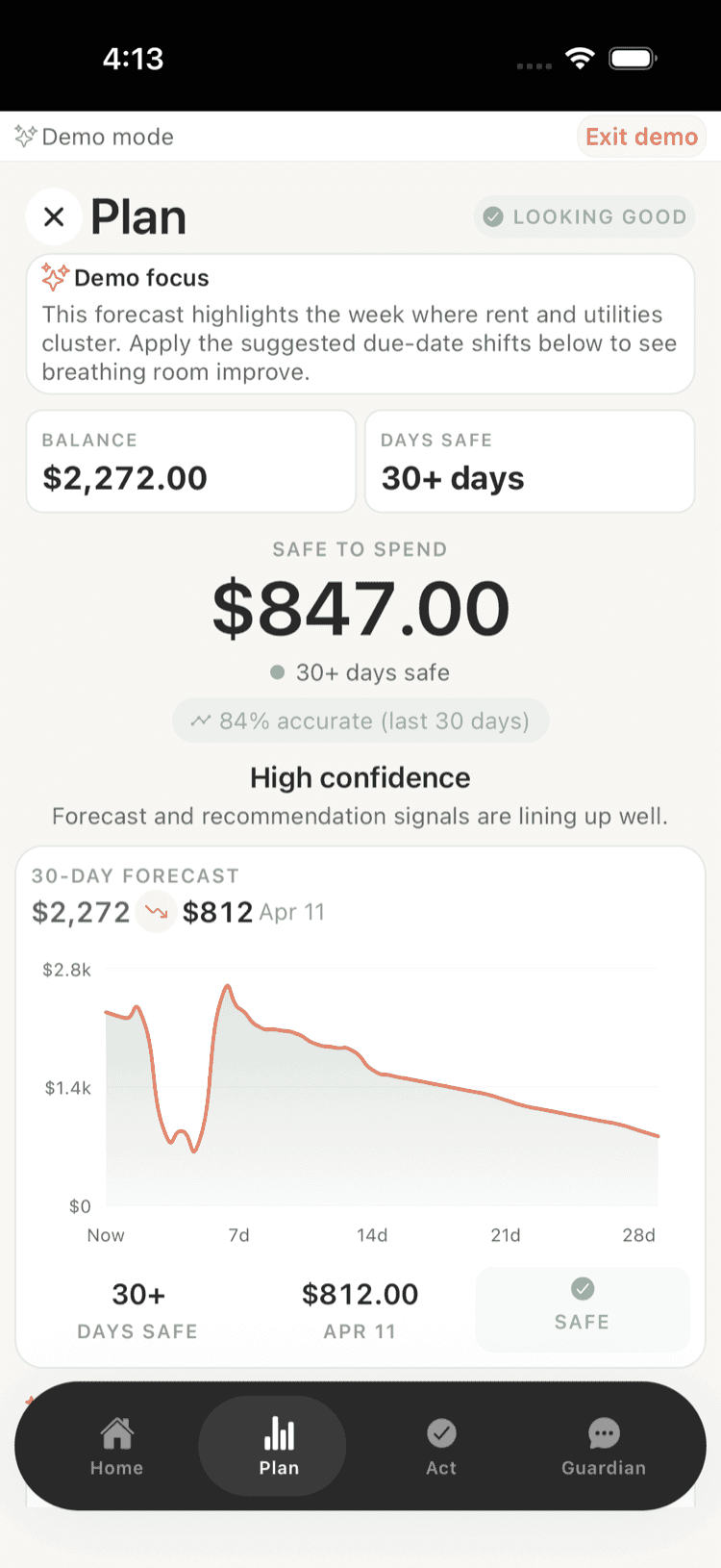
Living paycheck-to-paycheck doesn't mean you're doomed to overdraft fees and financial anxiety. Cash flow forecasting gives you a crystal ball into your bank account, showing exactly when money comes in and goes out over the next 30-90 days. This guide will teach you to predict your balance, catch timing mismatches before they cost you, and finally get ahead of your bills instead of chasing them.
Setting Up Your Cash Flow Foundation
Map Your Income Timing Patterns
Track when your paychecks, gig payments, and side hustles actually hit your account, not just when they're 'due.' This timing intelligence prevents overdrafts.
Create a Bill Calendar with Exact Due Dates
Plot every recurring bill on a visual calendar, including the specific day funds are withdrawn. Many bills pull money 1-3 days before the 'due date.'
Audit All Automatic Payments and Subscriptions
Export bank statements to find forgotten subscriptions and automatic payments that could surprise your forecast. Cancel unused services immediately.
Set Up Low Balance Alerts at $200
Configure your bank app to alert you when your balance drops below $200, giving you time to transfer money or delay payments.
Link All Accounts for Complete Visibility
Connect checking, savings, credit cards, and cash apps to one dashboard so you can see your total liquidity, not just one account balance.
Document Irregular Income Sources
Create a list of unpredictable income like tips, bonuses, or freelance payments with their typical amounts and frequency patterns.
Track Seasonal Spending Patterns
Identify months when you spend more (holidays, back-to-school, summer) and adjust your forecasts to account for these cyclical changes.
Build a Grace Period Buffer
Keep a $100-300 buffer in your forecast calculations to account for small timing errors and unexpected micro-expenses.
Set Up Automatic Savings Rules
Program your bank to auto-save $25-50 when your balance exceeds a certain threshold, building emergency funds without thinking about it.
Create Backup Payment Methods
Identify which bills can be paid late with minimal fees and which credit cards you could use in emergencies to bridge cash flow gaps.
Monitor Processing Times for Different Payment Types
Learn how long ACH transfers, mobile deposits, and different payment methods take to clear, then factor these delays into your forecasts.
Set Up Multiple Bank Account Structure
Use separate accounts for bills, spending money, and savings to prevent accidentally spending bill money and simplify cash flow tracking.
Automate Payday Money Distribution
Set up automatic transfers that move money to bills and savings accounts the day your paycheck arrives, ensuring proper allocation.
Create Spending Category Limits
Set weekly spending caps for discretionary categories like food delivery and entertainment to prevent forecast-busting impulse purchases.
Establish Bill Payment Schedule
Choose 1-2 specific days per month to pay all bills, making it easier to predict exactly when money will leave your accounts.
Advanced Forecasting Techniques
Use the 4-Week Rolling Forecast Method
Plan your cash flow in 4-week chunks instead of monthly to better align with bi-weekly paychecks and avoid calendar month confusion.
Apply the 80/20 Rule to Variable Expenses
For unpredictable costs like gas and groceries, forecast 80% of your typical amount to build in a safety margin while staying realistic.
Model Three Scenario Forecasts
Create best-case, worst-case, and realistic scenarios for your income to prepare for different outcomes, especially with gig work.
Track Your Forecast Accuracy Rate
Compare your predictions to actual results weekly and adjust your forecasting assumptions based on where you're consistently wrong.
Use Historical Spending Patterns
Analyze the last 6 months of spending to identify your true average costs, not what you think you spend on categories.
Factor in Seasonal Income Fluctuations
If you're in seasonal work or have clients that pay less during certain months, build these patterns into your long-term forecasts.
Create Minimum Balance Targets by Day
Set specific dollar amounts your account should never drop below on certain days, accounting for upcoming large expenses.
Use Percentage-Based Variable Budgeting
Allocate percentages of each paycheck to different categories rather than fixed amounts to handle irregular income smoothly.
Implement the Envelope Method Digitally
Use apps that create virtual 'envelopes' for different spending categories, preventing you from overspending in any area.
Build Lag Time into Bill Forecasts
Add 1-2 extra days to all bill payment forecasts to account for processing delays and prevent close-call overdrafts.
Use Moving Averages for Irregular Expenses
Calculate 3-month moving averages for categories like dining out or entertainment to smooth out forecasting volatility.
Create Weekend vs Weekday Spending Models
Track how your spending differs between weekdays and weekends, then adjust daily forecasts accordingly for more accuracy.
Forecast Tax Payment Timing
If you're a gig worker, predict when quarterly taxes are due and set aside money weekly to avoid large cash flow hits.
Model Paycheck Deduction Changes
Account for changes in health insurance, 401k contributions, or other deductions that might alter your take-home pay forecasts.
Use Credit Utilization as Cash Flow Extension
Plan strategic credit card usage for timing mismatches, then schedule payments to minimize interest while maximizing cash flow flexibility.
Tools and Technology Solutions
Use YNAB for True Cash Flow Forecasting
You Need A Budget (YNAB) excels at showing future balances and preventing overspending by forcing you to assign every dollar a job.
Set Up PocketGuard for Overdraft Prevention
This app shows your 'spendable' balance after accounting for upcoming bills, subscriptions, and planned transfers, preventing accidental overdrafts.
Automate with Mint's Bill Tracking Features
Use Mint's bill reminder system and cash flow forecasting tools to get alerts about upcoming payments and low balances.
Leverage Your Bank's Built-in Forecasting
Many banks now offer 30-day balance predictions and spending insights. Activate these features in your mobile banking app.
Use Simplifi for Subscription Tracking
Quicken Simplifi automatically categorizes and tracks recurring subscriptions, helping you spot cash flow drains and forgotten services.
Set Up Automated Savings with Digit
Digit analyzes your cash flow patterns and automatically saves small amounts when you can afford it, building emergency funds naturally.
Create Excel Templates with Formulas
Build custom spreadsheets that automatically calculate your future balance based on known income and expenses, updating in real-time.
Use Honeydue for Couples' Cash Flow
If you share finances, Honeydue lets both partners track spending and upcoming bills, preventing cash flow surprises.
Implement Tiller for Spreadsheet Integration
Tiller automatically feeds your bank data into Google Sheets, letting you build custom cash flow models with live data.
Set Up Zelle and Venmo for Emergency Transfers
Prepare instant money transfer methods between accounts or from friends/family to quickly resolve cash flow shortfalls.
Use Calendar Apps with Financial Reminders
Set up Google Calendar or Apple Calendar with specific reminders for bill payments, payday money allocation, and balance checks.
Automate with IFTTT Financial Triggers
Create If This Then That (IFTTT) automations that send you alerts or transfer money based on account balance thresholds.
Use Credit Karma for Credit Utilization Monitoring
Track your credit card balances and utilization to ensure your cash flow backup plans don't hurt your credit score.
Set Up Multiple Banking Apps
Download apps from all your banks and credit unions to quickly check balances and transfer money when timing issues arise.
Use Grocery and Gas Apps for Spending Control
Apps like GasBuddy and grocery store apps help you find cheaper options and earn rewards, keeping variable expenses predictable.
Troubleshooting Common Cash Flow Problems
Fix the Bi-Weekly vs Monthly Bill Mismatch
When you're paid bi-weekly but bills are monthly, create a system to save partial bill amounts from each paycheck to avoid timing crunches.
Handle Irregular Gig Work Income
Create a 'income smoothing' account where you deposit gig earnings and pay yourself a consistent weekly amount to stabilize cash flow.
Solve the Subscription Surprise Problem
Set up a dedicated checking account just for subscriptions with auto-transfer funding, so these payments never surprise your main account.
Navigate Holiday and Seasonal Cash Crunches
Start saving $25-50 monthly in July for holiday expenses, and factor known seasonal costs into your year-long forecast.
Manage Credit Card Payment Timing
Schedule credit card payments for 2-3 days after your paycheck clears to ensure sufficient funds and avoid late fees.
Deal with Rent vs Paycheck Timing Issues
If rent is due before your paycheck, negotiate with landlords for a later due date or keep one month's rent in a dedicated account.
Prevent Utility Shutoffs During Cash Shortfalls
Know your utility companies' payment extension policies and set up automatic notifications before disconnect dates.
Handle Unexpected Expenses Without Derailing Cash Flow
Create a micro-emergency fund of $200-500 and establish which expenses can be delayed or put on credit if emergencies arise.
Manage Multiple Income Stream Coordination
If you have W-2 income plus gig work, forecast each income stream separately and plan for different payment schedules.
Fix Overdraft Fee Spiral Situations
If you're caught in overdraft fee loops, call your bank immediately to request fee reversal and set up overdraft protection transfers.
Resolve Payroll Deposit Delays
When direct deposits are delayed, know your bank's funds availability policy and have backup payment methods ready for critical bills.
Handle Student Loan Payment Timing
Schedule student loan payments for mid-month when your account balance is typically highest, not at month-end when it's lowest.
Navigate Insurance Payment Bunching
If possible, spread insurance payments throughout the year rather than paying semi-annually to avoid large cash flow hits.
Manage Tax Refund Cash Flow Planning
Don't count on tax refunds for essential expenses. If you typically get refunds, adjust withholding to improve monthly cash flow instead.
Deal with Bank Account Holds and Delays
Understand your bank's hold policies for different deposit types and plan cash flow around potential 1-5 day delays for large checks.
Take Control of Your Finances
Shelter gives you a clear picture of your cash flow, tracks your bills and subscriptions, and helps you avoid overdraft fees -- all without the stress of traditional budgeting. Connect your accounts in minutes and let Shelter do the heavy lifting.
Download Shelter and start managing your money smarter today.
Take control of your cash flow
Shelter connects to your bank, forecasts your balance 30 days out, and alerts you before problems happen.