TL;DR
To budget with irregular income: plan around your lowest normal month (not your average), separate core bills from flexible spending, think in 1-2 week windows instead of monthly, build a buffer during strong weeks, and use percentages instead of fixed dollar amounts. Cash flow forecasting works better than category budgets for variable income.
Budgeting with irregular income fails when it pretends your income is regular.
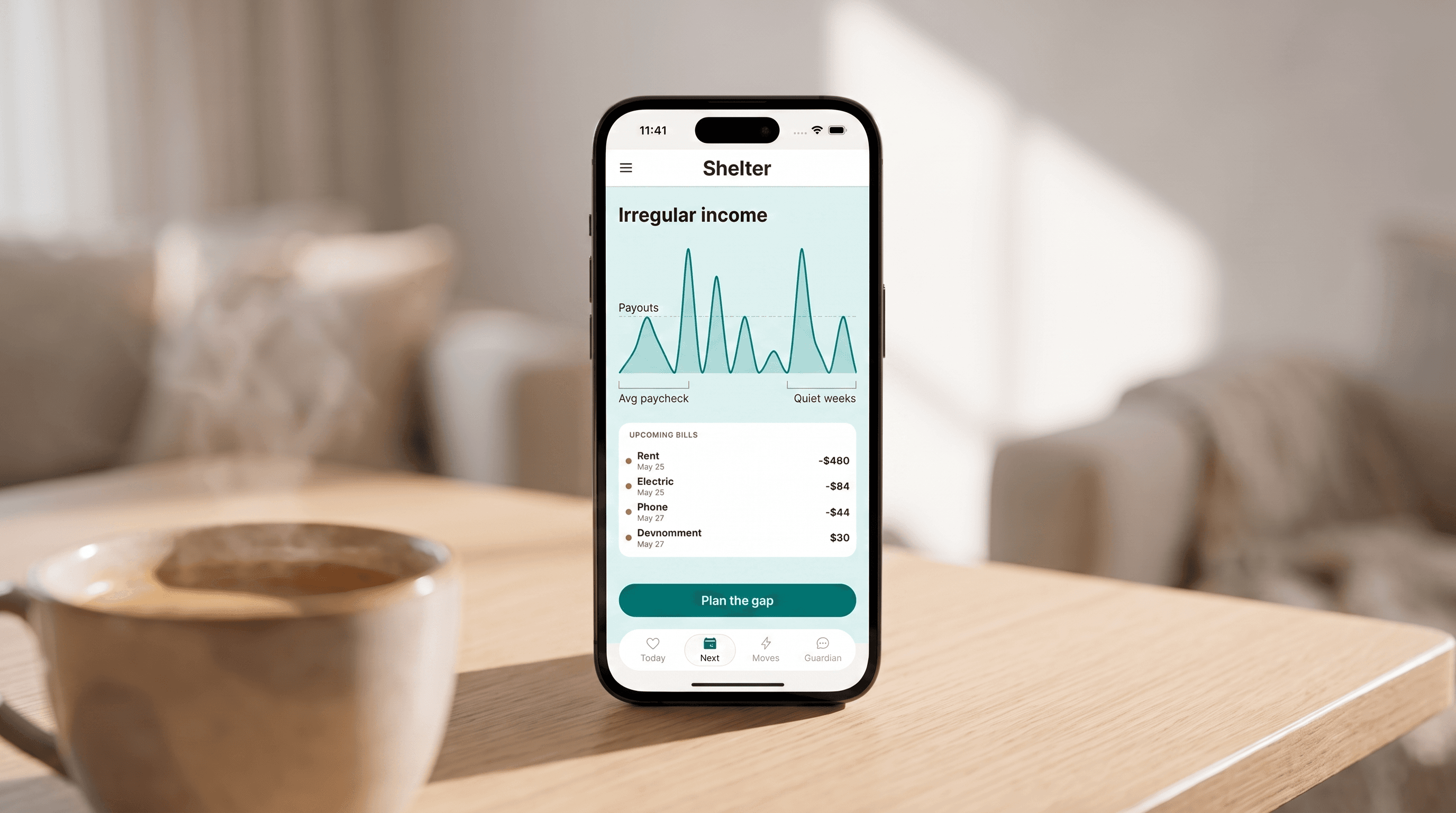
That sounds obvious, but it is the root problem behind a lot of bad advice. Most budgeting systems assume a fixed monthly paycheck and evenly spaced bills. If your money comes from freelance work, gig platforms, tips, commission, hourly shifts, or inconsistent client payments, that assumption breaks immediately.
The result is familiar: a budget that looks good on paper, feels wrong by the second week, and gets ignored by the end of the month.
The fix is not to become more disciplined. The fix is to use a system built around variability.
Start With Your Lowest Normal Month
When income changes month to month, the safest baseline is not your best month or even your average month. It is your lowest normal month.
That gives you a conservative floor to plan around.
If you usually make:
- $4,800 in a strong month,
- $4,000 in an average month,
- and $3,200 in a weak but normal month,
build your core plan around the $3,200 number.
Why? Because it prevents good months from teaching you a lifestyle your lean months cannot support.
Separate Core Bills From Flexible Spending
With irregular income, not every expense should be treated the same way.
Split your money into two groups:
1. Core obligations
These are the bills that keep your life stable:
- rent,
- utilities,
- insurance,
- debt minimums,
- groceries,
- transportation,
- phone,
- and anything else that would create immediate stress if missed.
2. Flexible spending
This is the category that can expand or contract:
- restaurants,
- shopping,
- entertainment,
- travel,
- nonessential subscriptions,
- and convenience spending.
This separation matters because irregular income budgeting is really a prioritization system. You want core obligations covered first, then you decide what the flexible category can handle this week.
Stop Thinking in Months Only
Monthly budgets are often too coarse for variable income.
A better unit is the next one or two weeks:
- What is due before the next deposit?
- What income is most likely to arrive?
- What is safe to spend until then?
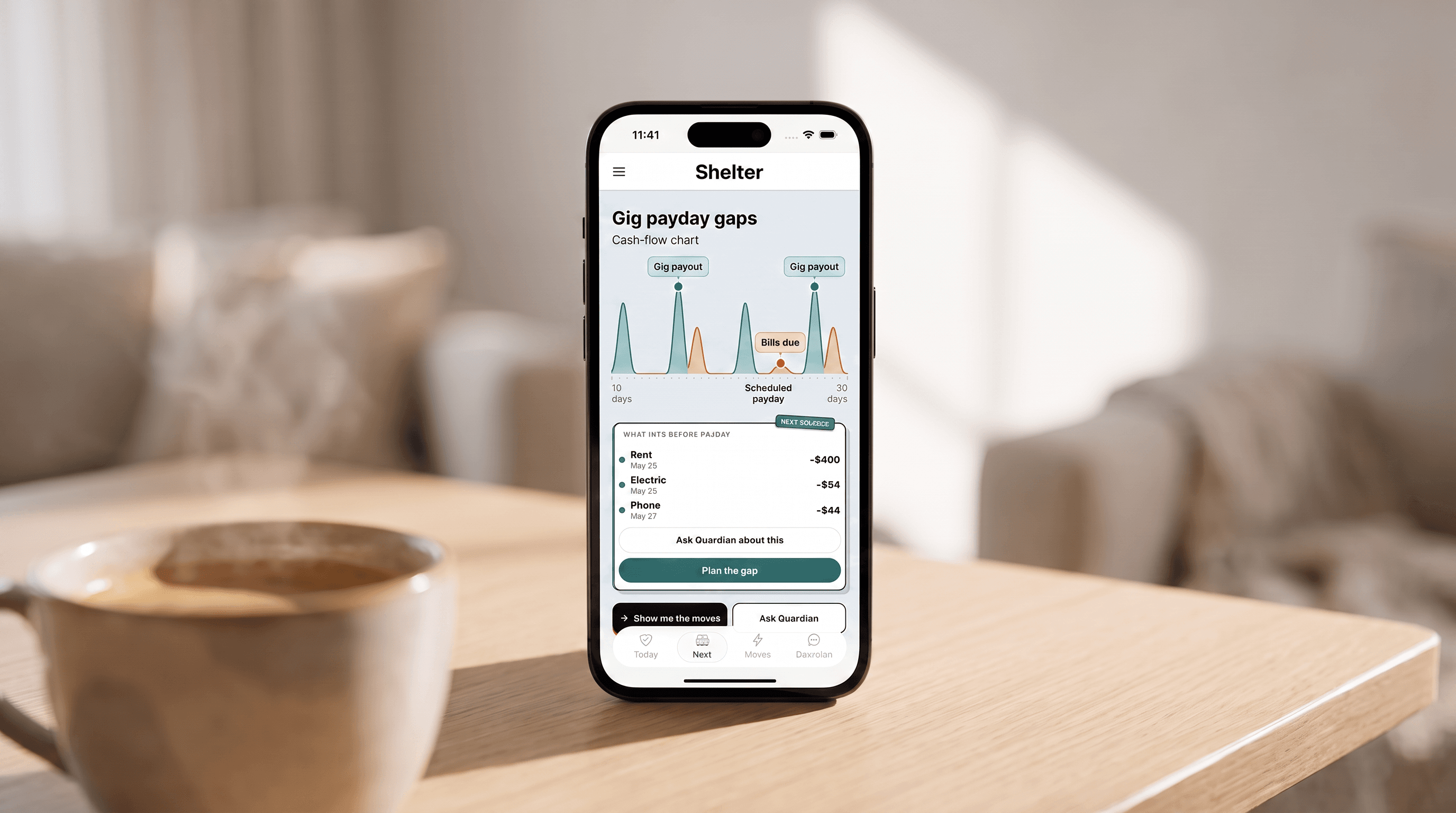
This is why many variable-income households do better with paycheck planning than with monthly category enforcement. The risk usually shows up in a tight window, not in the monthly total.
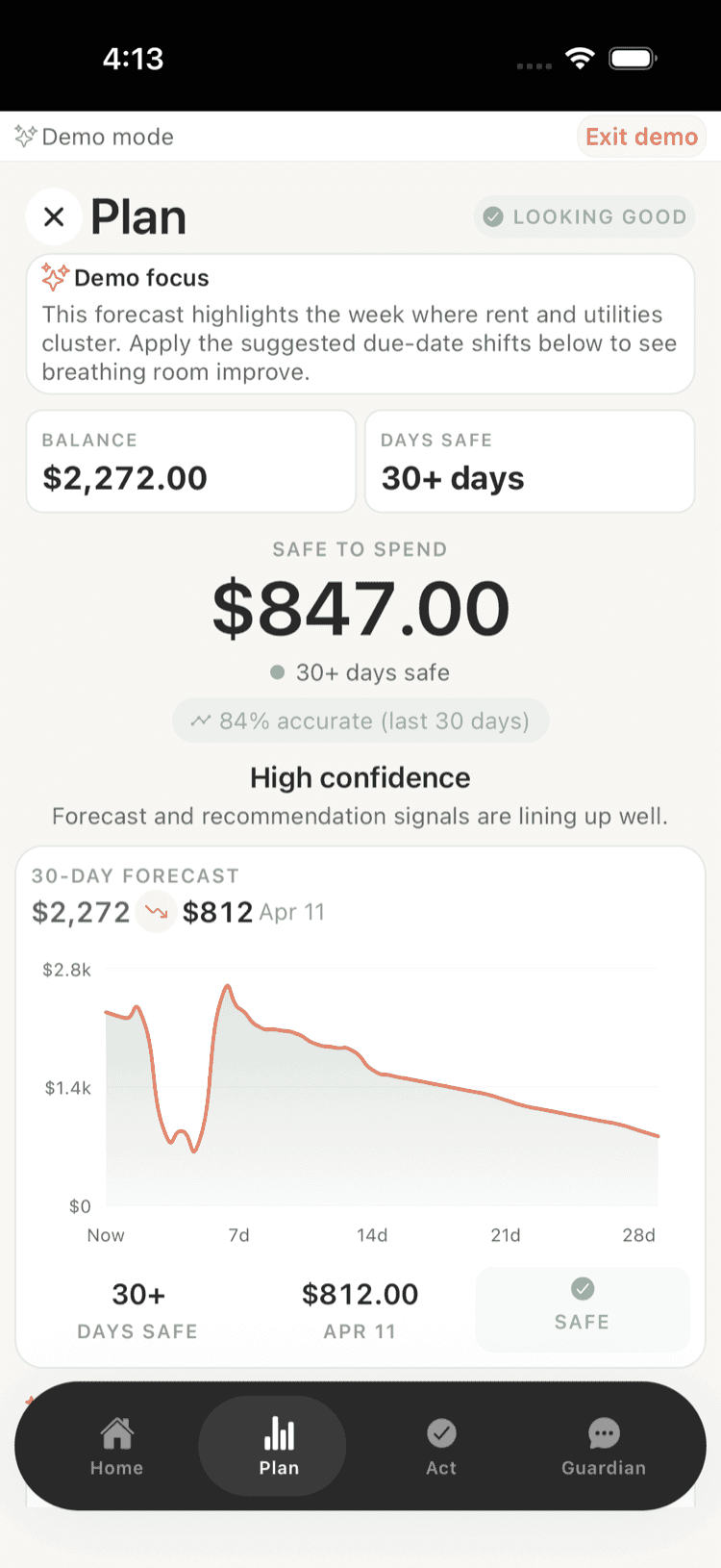
If you want the product version of that approach, the budgeting app for irregular income page explains how Shelter is built around near-term planning instead of rigid monthly assumptions.
Build an Income Buffer During Better Weeks
This is the lever that makes the whole system easier.
When a strong week or month arrives, do not let the extra disappear into slightly higher everyday spending. Use part of it to build a buffer specifically for slow periods.
This buffer does not have to be huge to matter. Even a few hundred dollars can keep a weak income week from turning into overdraft fees or panic spending on a credit card.
Our guide on how much to keep in checking covers how to size that kind of timing cushion.
Use Percentages When Fixed Amounts Keep Breaking
If your income changes a lot, percentages are often easier than hard dollar rules.
For example:
- 60% to core bills and essentials
- 15% to taxes or irregular obligations
- 15% to savings/buffer
- 10% to flexible spending
The exact percentages are not universal. The point is that they flex with income instead of forcing the same dollar plan onto every month.
Assume Some Income Will Arrive Late
One of the easiest ways to break an irregular-income budget is to count expected money as if it is already in the account.
Freelance clients pay late. Gig platforms delay transfers. Commission checks move. Tips fluctuate. Conservatism matters.
A safer rule is:
- only count money that has landed,
- or count expected money with a margin of doubt if it is not guaranteed yet.
That mindset reduces the number of weeks where the budget looks fine until reality shows up two days later.
Watch the Near-Term Cash Gap
The most dangerous moment for variable income is the short gap between outgoing bills and incoming money.
That is where overdrafts, declined payments, and emergency credit-card use happen.
A better system watches that gap constantly:
- what is due next,
- what income is confirmed,
- how low the account is likely to go,
- and whether you need to cut spending before things get tight.
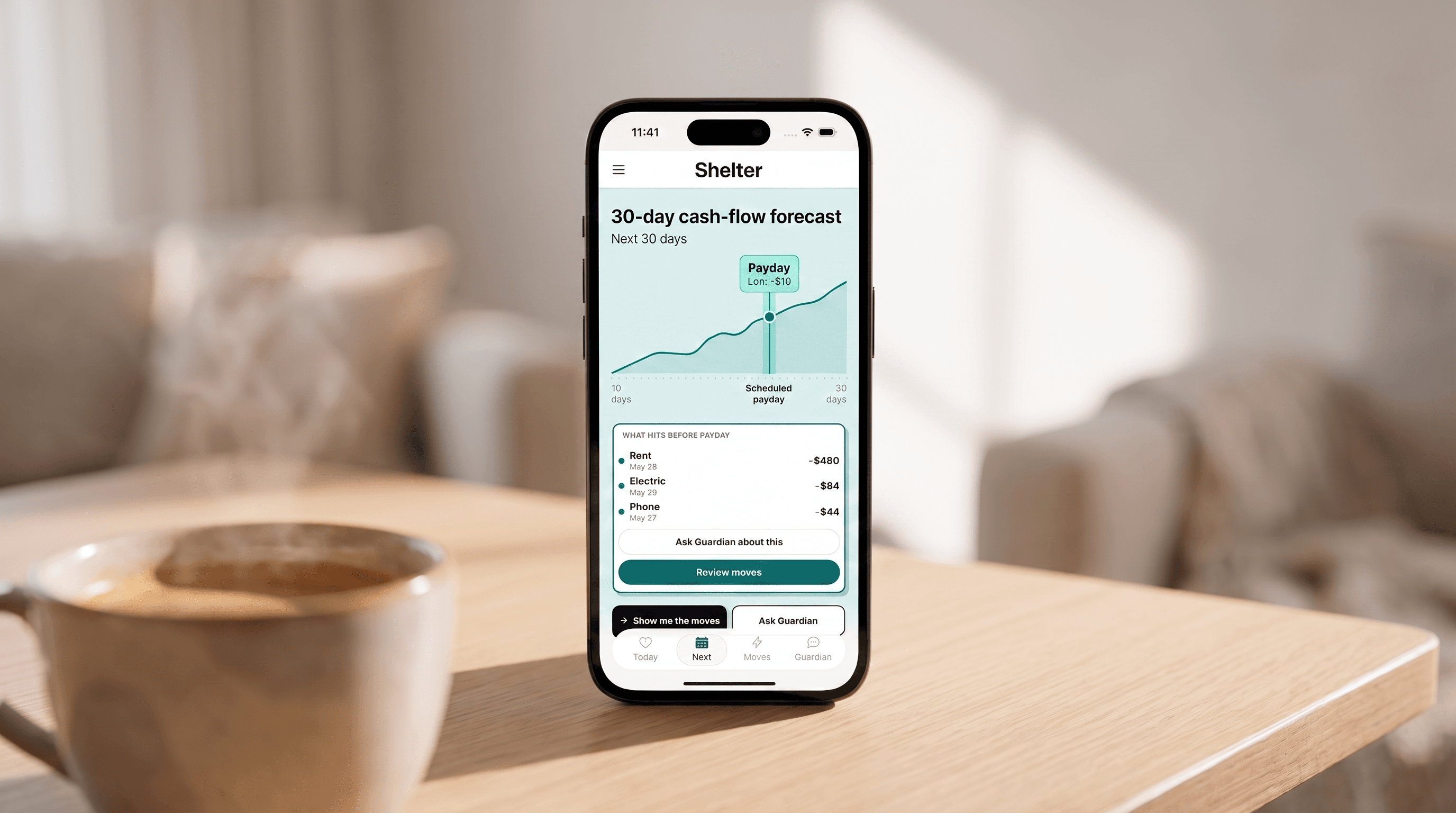
That is closer to cash-flow forecasting than to traditional budgeting, which is why many freelancers and gig workers find it more useful in practice.
What a Good Irregular-Income System Should Feel Like
It should feel:
- conservative in weak weeks,
- flexible in strong weeks,
- clear about priorities,
- and realistic about timing.
What it should not feel like is a monthly guilt machine that punishes you for not having a salary.
The Better Question
Instead of asking:
"How do I build a perfect monthly budget with irregular income?"
ask:
"How do I make sure my essentials are covered and my spending adapts to what is actually coming in?"
That question leads to a system that survives contact with real life.
If you want help turning that into day-to-day decisions, the paycheck planning app page and safe to spend app page show how Shelter approaches uneven income in a more practical way than a static monthly budget.
Take control of your cash flow
Shelter connects to your bank, forecasts your balance 30 days out, and alerts you before problems happen.