We've all done it. You're standing in line at the grocery store, you quickly open your banking app, and you see a balance of $350. You mentally calculate that your groceries are only $80, so you swipe your card with confidence.
Three days later, you get an alert: Your account is overdrawn, and you've been charged a $35 overdraft fee.
What happened? Your bank balance lied to you.
The Bank Balance Trap
Your bank app is designed to show you a snapshot of the past, not a map of the future.
When it showed you $350, it was technically accurate for that precise second. But it completely ignored the reality of your financial obligations:
- It didn't account for the $120 utility bill set to auto-draft tomorrow.
- It ignored the $15 Netflix subscription hitting on Friday.
- It didn't subtract the $90 you need for gas to get to work next week.
By the time Friday rolls around, that $350 was actually already spent. You just didn't know it.
"Your bank balance tells you how much cash is in the vault. It doesn't tell you how many people are waiting outside with a claim to it."
The Psychological Toll
Relying on your bank balance creates a state of constant, low-level anxiety. It's why so many people practice "bank account avoidance"—the fear of looking at their balance because they don't really know what it means.
When you don't trust the number on the screen, you either:
- Hoard cash and feel falsely poor, depriving yourself of things you can actually afford.
- Spend with false confidence and get hit with overdraft fees.
The Alternative: Safe-to-Spend
To break the cycle of overdraft fees, you have to stop looking at your raw bank balance and start looking at your Safe-to-Spend number.
Safe-to-Spend is a simple equation:
Current Balance - Upcoming Bills - Upcoming Subscriptions = Safe-to-Spend
If your balance is $350, but you have $200 in bills coming up before your next paycheck, your Safe-to-Spend is $150. That is the true number you should base your grocery store decisions on.
Stop Guessing. Start Forecasting.
Most overdrafts don't happen because people are irresponsible. They happen because your bank shows what you have, not what you're about to spend.
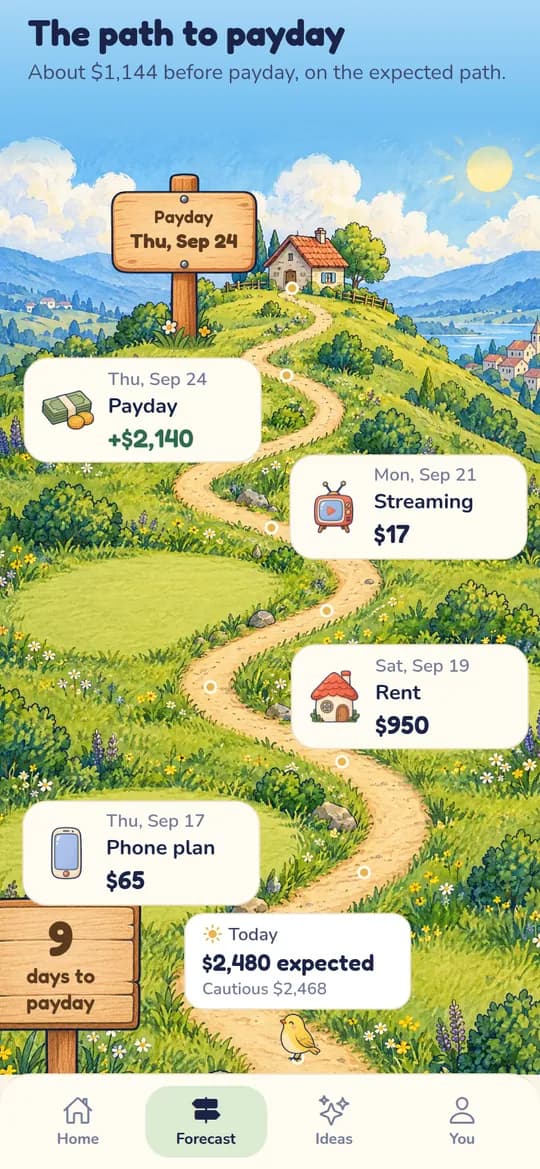
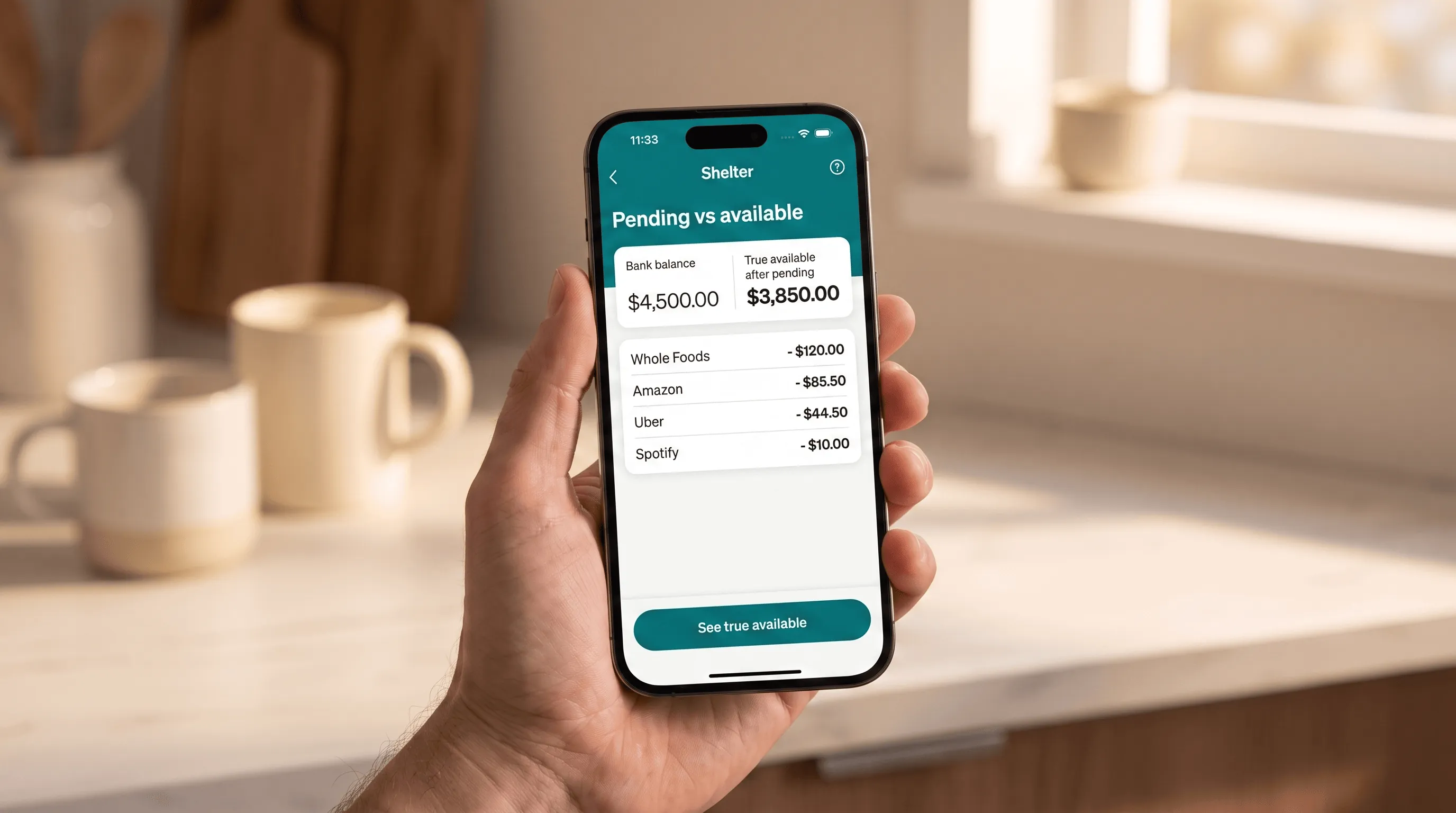
Shelter calculates your Safe-to-Spend automatically. By analyzing your bills, subscriptions, and income patterns, Shelter shows you the true reality of your money over the next 30 days. No more guessing. No more math in the checkout line.
Take the Next Step
- Ready to bulletproof your accounts? Read Overdraft Protection for Beginners.
- Dive deeper into the math in our guide on How Much Money Can I Spend Before Payday?.

Take control of your cash flow
Shelter connects to your bank, forecasts your balance 30 days out, and alerts you before problems happen.