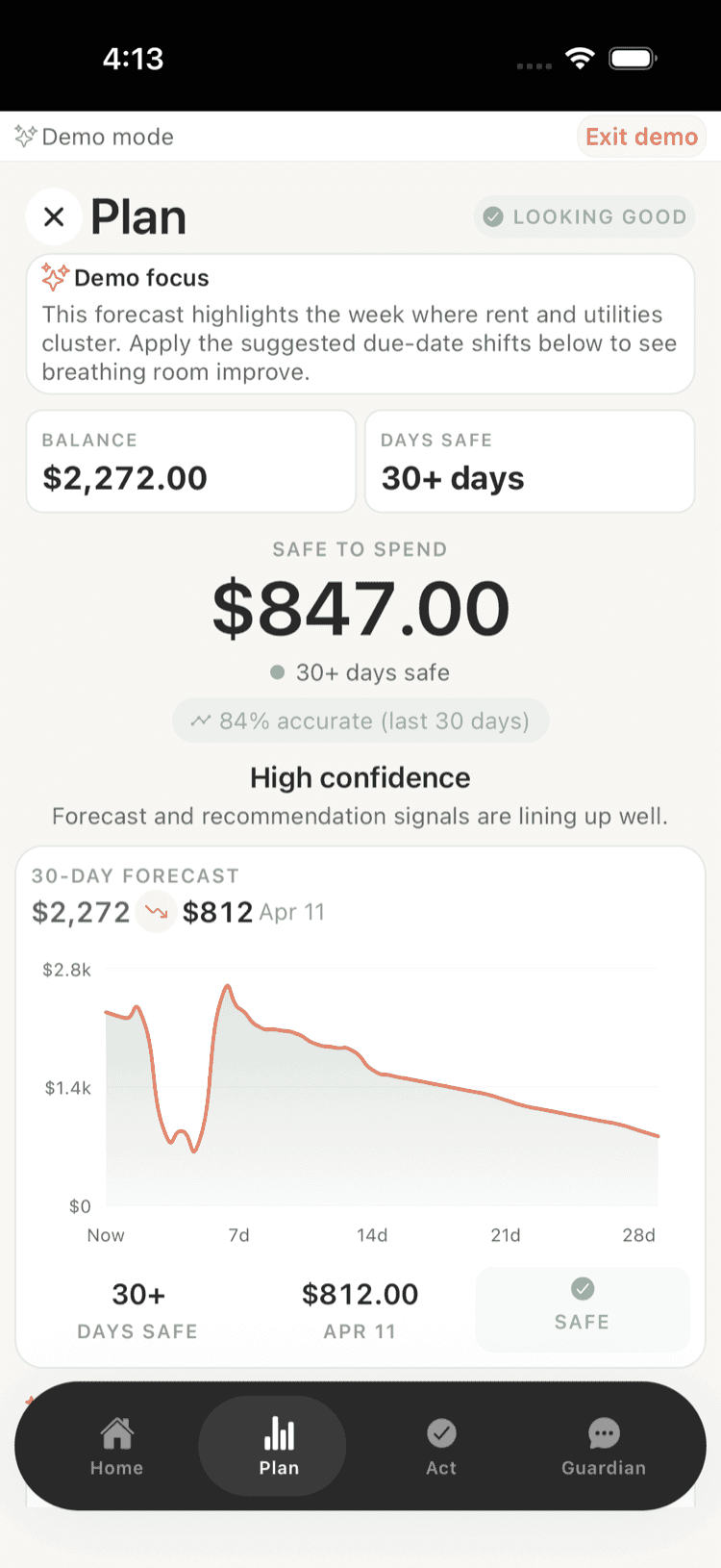
Overdraft fees hit gig workers and young professionals hardest, averaging $35 per incident when paychecks don't align with bill due dates. This comprehensive checklist covers the latest apps, bank features, and cash flow strategies to eliminate overdraft surprises in 2026.
Essential App Setup & Banking Features
-
Enable real-time balance notifications on your primary banking app -- Set alerts for balances below $100 to catch potential overdrafts before they happen. Most banks now offer instant push notifications.
-
Download Mint Mobile or similar overdraft prevention apps -- These apps connect to your bank and predict upcoming overdrafts 3-5 days in advance based on pending transactions.
-
Set up low balance alerts at $50, $25, and $10 thresholds -- Multiple alert levels give you graduated warnings as your balance drops, allowing time for deposits or expense delays.
-
Activate overdraft protection transfer from savings -- Link your checking to savings for automatic transfers when overdrawn, typically costing $10 vs $35 overdraft fees.
-
Enable transaction decline instead of overdraft coverage -- Opt out of overdraft programs so debit cards are declined rather than triggering fees, preventing impulse overdrafts.
-
Set up direct deposit splitting between checking and savings -- Automatically save 10-20% of each paycheck in a separate account to build your overdraft protection buffer.
-
Use banks offering overdraft grace periods -- Switch to institutions like Ally or Capital One 360 that give you until end of business day to cover overdrafts fee-free.
-
Install Chime or similar neobank apps with built-in overdraft prevention -- Many online banks offer fee-free overdraft coverage up to $200 and earlier direct deposit access.
-
Set up account aggregation in personal finance apps -- Connect all accounts to see your total cash position across multiple banks and credit cards in one view.
-
Enable spending category alerts for groceries and gas -- Get notifications when you've spent 80% of your monthly budget in essential categories to prevent overspending.
-
Activate weekend and holiday transaction holds -- Some apps let you pause non-essential spending during weekends when you can't easily transfer money between accounts.
-
Set up IFTTT or Zapier automation for balance monitoring -- Create automated workflows that text family members or trigger other actions when your balance hits critical levels.
-
Configure geofencing alerts near expensive locations -- Get spending reminders when approaching costly venues like airports, stadiums, or tourist areas where you might overspend.
-
Enable merchant-specific spending limits -- Set monthly caps for services like Uber, DoorDash, or Amazon to prevent autopilot spending that drains your account.
-
Install backup payment method apps like PayPal or Venmo -- Link alternative funding sources that can cover purchases when your primary account runs low, avoiding declined transactions.
Cash Flow Forecasting & Bill Management
-
Create a bill calendar with all due dates and amounts -- Map out every recurring payment with exact dates and dollar amounts to visualize cash flow needs throughout the month.
-
Set up bill pay automation 2 days after payday -- Schedule automatic payments for 48 hours after your paycheck hits to ensure funds are available while maintaining cash flow.
-
Use the envelope budgeting method for variable income -- Allocate gig work earnings into virtual envelopes for rent, utilities, and discretionary spending to prevent bill payment shortfalls.
-
Track pending transactions daily for 7 days -- Monitor which charges are still processing to get an accurate picture of your real available balance vs displayed balance.
-
Negotiate bill due date changes to align with payday -- Contact utility, phone, and credit card companies to move due dates closer to when you receive income.
-
Set up bi-weekly payments for monthly bills -- Pay half of large bills like rent every two weeks to smooth cash flow and reduce the impact of single large payments.
-
Use cash flow forecasting apps like Tiller or YNAB -- These tools project your balance 30 days forward based on recurring income and expenses, highlighting potential overdraft dates.
-
Create a backup bill payment fund equal to one month's expenses -- Build a separate account specifically for bills to ensure payments are covered even during irregular income periods.
-
Track income timing patterns for gig work -- Document when platforms like Uber, DoorDash, or freelance clients typically pay to better predict cash flow timing.
-
Set up bill reminder notifications 5 days before due dates -- Early reminders give you time to adjust spending or arrange funds rather than scrambling at the last minute.
-
Use credit cards strategically for bill smoothing -- Put fixed expenses on cards with 25-day grace periods to create temporary float time while maintaining checking balance.
-
Create seasonal cash flow projections for irregular workers -- Map out busy and slow seasons for your work to build cash reserves during peak earning periods.
-
Set up utility budget billing plans -- Convert variable utility bills into fixed monthly payments to make cash flow forecasting more predictable.
-
Use bill pay services that hold payments until funds are available -- Some services will queue payments and only process them when your account balance is sufficient.
-
Track float time for different payment methods -- Understand how long checks, ACH transfers, and card payments take to clear to optimize payment timing strategies.
Subscription & Recurring Payment Control
-
Audit all subscriptions using Truebill or similar apps -- These services scan your accounts for recurring charges and help cancel forgotten subscriptions that drain your balance.
-
Move all subscriptions to one credit card -- Consolidate recurring payments on a single card to prevent them from hitting your checking account unexpectedly.
-
Set up virtual cards for subscription management -- Use services like Privacy.com to create spending-limited virtual cards for each subscription, preventing surprise charges.
-
Create a subscription calendar with renewal dates -- Track when annual subscriptions renew so you can prepare for large charges or cancel before automatic renewal.
-
Enable purchase notifications for all payment methods -- Get instant alerts for every charge so you can catch unauthorized or forgotten subscriptions immediately.
-
Use prepaid cards for trial subscriptions -- Load prepaid cards with exact amounts needed for trials to prevent automatic charges when trials end.
-
Set up subscription spending limits with your bank -- Some banks allow you to cap recurring charges at specific dollar amounts to prevent unexpectedly high bills.
-
Cancel subscriptions 7 days before low-income periods -- Temporarily pause non-essential services before known cash flow difficulties like seasonal work slowdowns.
-
Use annual payment discounts to reduce subscription costs -- Pay yearly when cash flow is good to save money and eliminate monthly charges that could cause overdrafts.
-
Set up merchant alerts for subscription services -- Get notified when specific companies like Netflix or Spotify are about to charge your account.
-
Create a subscription-only checking account -- Fund a separate account specifically for recurring charges to isolate them from daily spending money.
-
Use gift cards for streaming and app subscriptions -- Purchase gift cards during sales to prepay for services, eliminating surprise charges from your bank account.
-
Set up renewal reminders 30 days before annual subscriptions -- Give yourself time to evaluate whether to continue services and prepare financially for large annual charges.
-
Negotiate payment date changes for expensive subscriptions -- Contact services to move billing dates away from rent/mortgage due dates to spread out cash flow impact.
-
Use browser extensions that warn about subscription signups -- Install tools that alert you when entering payment information on sites known for difficult-to-cancel subscriptions.
Emergency Spending Controls & Backup Plans
-
Create a $200 emergency overdraft buffer fund -- Keep this amount in savings specifically to cover unexpected overdrafts while you arrange proper funding.
-
Set up instant transfer capabilities between all your accounts -- Enable online and mobile transfers so you can move money quickly when you get low balance alerts.
-
Use expense tracking apps with spending limits -- Set hard spending caps in apps like Mint or YNAB that warn you before purchases that would cause overdrafts.
-
Enable payday advance features through employers or apps -- Use services like DailyPay or EarnIn to access earned wages early when facing overdraft situations.
-
Set up credit card cash advance as absolute last resort -- While expensive, having this option configured can prevent multiple overdraft fees in emergency situations.
-
Create spending freeze protocols for financial emergencies -- Develop a plan to immediately stop all non-essential spending when your balance hits critical levels.
-
Use bank courtesy overdraft policies strategically -- Understand your bank's fee forgiveness policies and use them sparingly for genuine emergencies.
-
Set up family or friend emergency transfer arrangements -- Arrange with trusted contacts who can quickly transfer money in overdraft emergencies, with clear repayment terms.
-
Use peer-to-peer lending apps for short-term cash needs -- Services like Dave or MoneyLion can provide small advances to prevent overdrafts, often with lower fees than banks.
-
Keep a list of fees you can dispute or request refunds for -- Know which charges you can legitimately contest to recover money for essential expenses.
-
Set up automatic transfer rules based on balance thresholds -- Configure your bank to automatically move money from savings when checking drops below specific amounts.
-
Use cash-back debit cards to build small reserves -- Accumulate small cash-back amounts that can serve as micro-emergency funds for overdraft prevention.
-
Create a rapid income generation plan -- Identify quick gig opportunities (food delivery, task apps) you can activate immediately when cash runs low.
-
Use balance transfer checks strategically for bill payments -- Convert urgent bills to credit card debt temporarily to prevent overdrafts, then pay down aggressively.
-
Set up expense deferral contact lists -- Maintain relationships with landlords, utility companies, and creditors who may allow payment delays in emergencies.
Take Control of Your Finances
Shelter gives you a clear picture of your cash flow, tracks your bills and subscriptions, and helps you avoid overdraft fees -- all without the stress of traditional budgeting. Connect your accounts in minutes and let Shelter do the heavy lifting.
Download Shelter and start managing your money smarter today.
Take control of your cash flow
Shelter connects to your bank, forecasts your balance 30 days out, and alerts you before problems happen.