If you bank with the Big 5 in Canada (RBC, TD, Scotiabank, BMO, CIBC), you know that a single poorly timed bill can cost you upwards of $48.
But what many Canadians don't realize is that the banking system here treats a negative balance very differently than in the US. This guide breaks down exactly how Canadian banks charge you for not having enough money, and how you can stop the bleeding.
The Big Difference: NSF Fees vs. Overdraft Fees
In Canada, there are two distinct penalties you can face when your account hits zero:
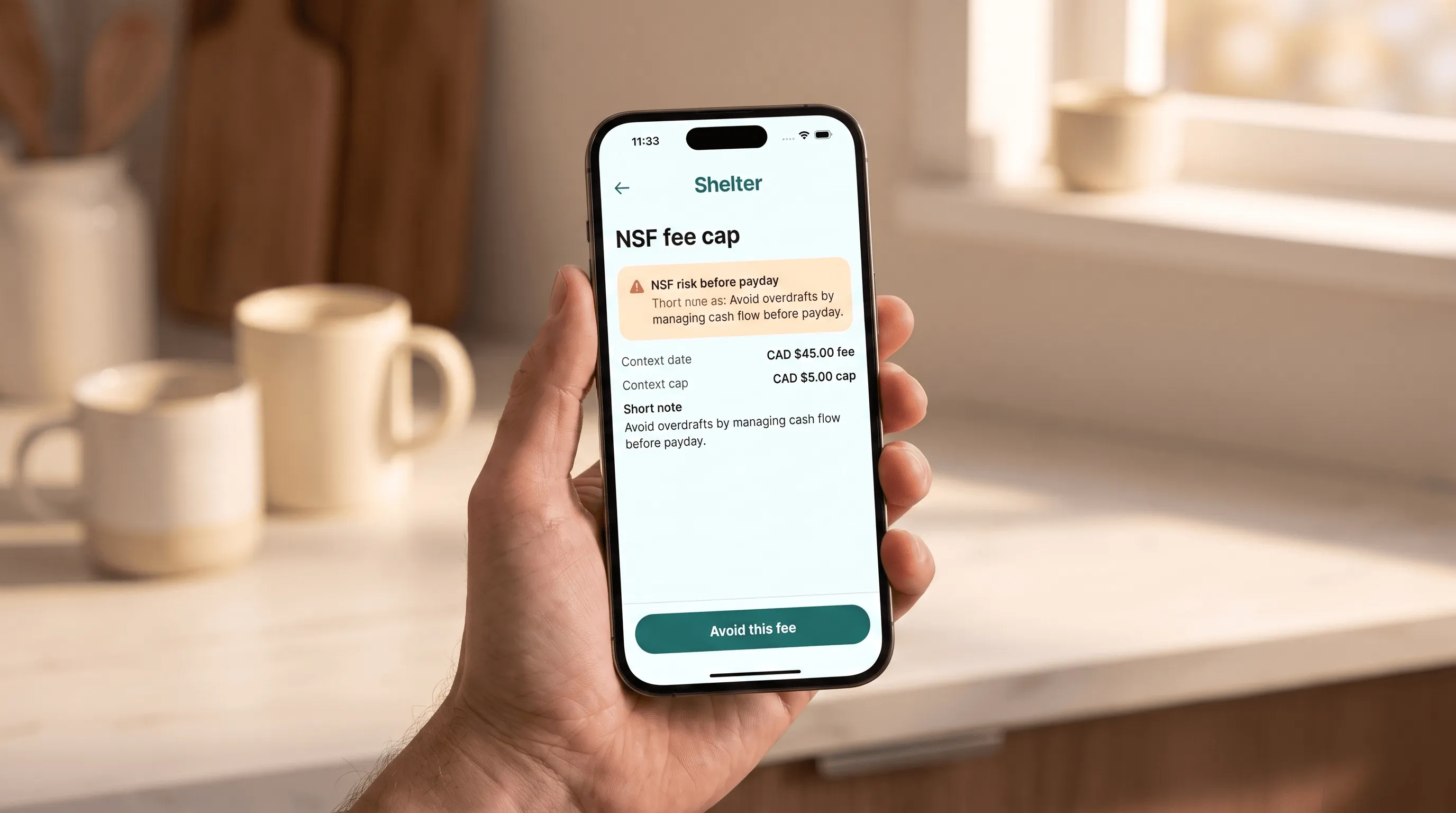
- Non-Sufficient Funds (NSF) Fee: If an automated bill (like hydro or rent) tries to pull money and your balance is too low, the bank will reject the payment and hit you with an NSF fee (typically $45-$48). To make matters worse, the merchant might also charge you a returned payment fee.
- Overdraft Fee: If you have overdraft protection enabled, the bank covers the transaction but charges you a fee (usually $5) plus an exorbitant interest rate (often 21%+) on the negative balance.
"Banks charge you money for not having money. The only way to win is to see the dip coming before the transaction ever hits."
Why Overdraft Protection Isn't Actually Protection
Many Canadians sign up for "Overdraft Protection" thinking it solves the problem. It doesn't. It just changes the type of fee you pay.
Instead of a $48 NSF fee, you pay a $5 monthly fee plus high interest. While it's slightly cheaper, it still costs you money and traps you in a cycle of paying the bank for a temporary cash flow problem.
How to Actually Prevent Fees
Most overdrafts and NSF fees aren't caused because you don't make enough money—they are caused because the timing of your bills doesn't align with the timing of your paycheque.
The Problem: Your Bank Balance is a Liar
When you open your TD or RBC app, it shows you your current balance. But it doesn't show you that your $120 internet bill is set to auto-draft tomorrow. If you see $150 and spend $50 on groceries, you will get hit with an NSF fee the next morning.
The Solution: Cash Flow Forecasting
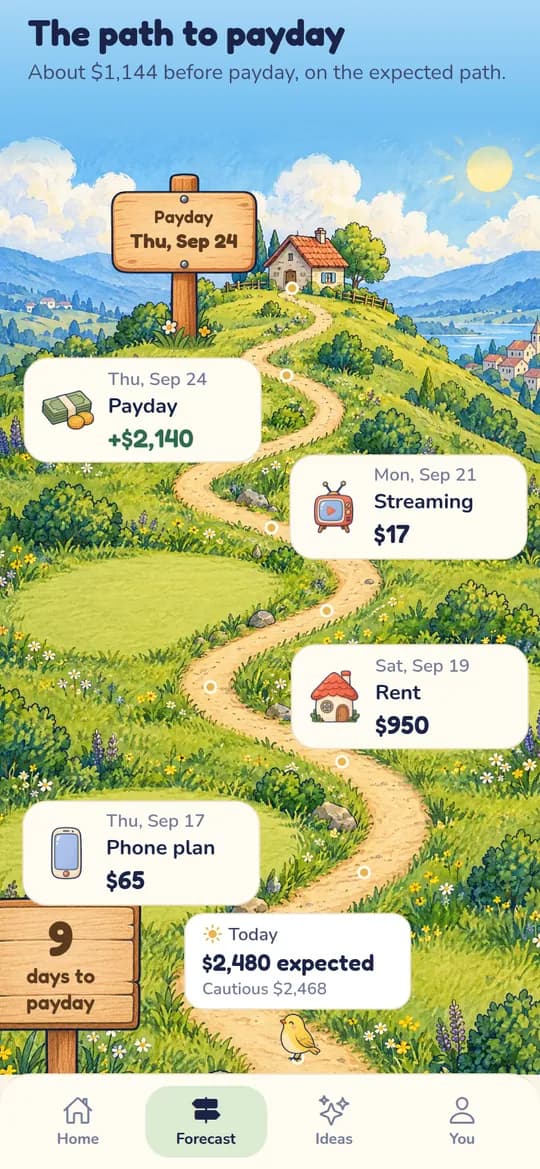
To stop NSF and overdraft fees, you need to know your Safe-to-Spend amount. This is your current balance minus all the upcoming bills and subscriptions that will hit before your next paycheque.
Instead of trying to calculate this manually in a spreadsheet, you can use automated tools.
The Shelter Funnel
Most overdrafts don't happen because people are irresponsible. They happen because your bank shows what you have right now, not what you're about to spend.
Shelter calculates your Safe-to-Spend after bills, subscriptions, and upcoming expenses so you know what is actually available today, tomorrow, and next week. By forecasting your balance 30 days into the future, Shelter acts as an early warning system, letting you know when you're about to hit zero days before it happens.
Next Steps
If you want to dive deeper into building an ironclad system for your money, check out Overdraft Protection for Beginners. For the country-agnostic six-step checklist (alerts, buffers, opt-out, bill timing), see how to avoid overdraft fees. The Canada NSF rules landing covers the 2026 FCAC cap. If you're a freelancer or gig worker dealing with irregular income, read our guide on the Best Overdraft Protection for Gig Workers.

Take control of your cash flow
Shelter connects to your bank, forecasts your balance 30 days out, and alerts you before problems happen.