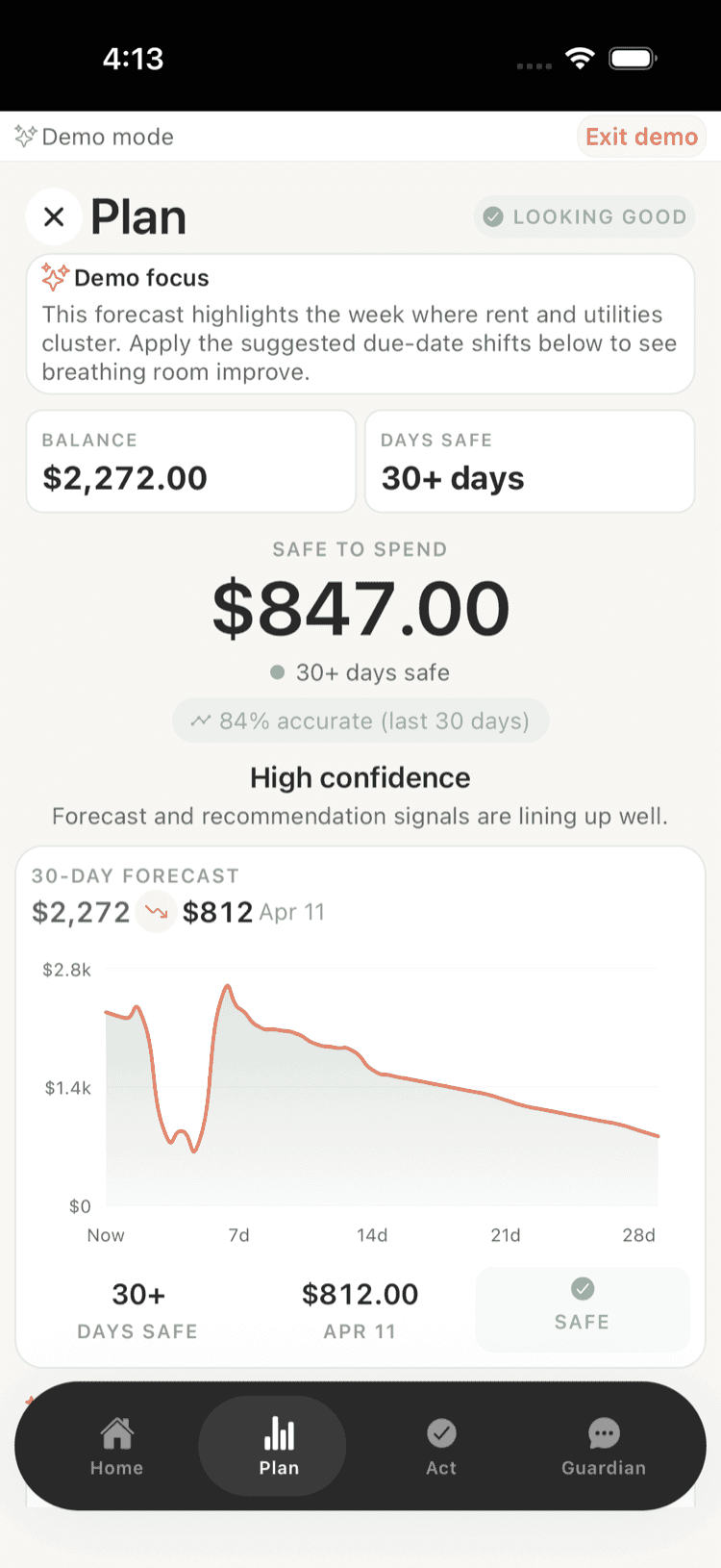
If you're tired of surprise overdraft fees and wondering whether you can afford that purchase next week, cash flow forecasting is your financial lifeline. This comprehensive checklist helps young professionals and gig workers build a clear picture of their upcoming income versus expenses, eliminating the guesswork that leads to costly timing mistakes.
Income Tracking & Prediction Setup
-
Map all irregular income sources -- List freelance clients, gig platforms, side hustles, and their typical payment cycles. Include average amounts and payment delays to predict when money actually hits your account.
-
Document employer payroll schedule -- Note exact pay dates, whether you're paid weekly/bi-weekly/monthly, and if there are holiday delays. Many people miss that some months have 3 paychecks instead of 2.
-
Track commission and bonus timing -- Record when commissions typically get processed and paid out. Note any quarterly or annual bonuses and their usual payment months.
-
Account for tax refunds and credits -- Include expected tax refunds, child tax credits, or stimulus payments in your annual forecast. These can be significant windfalls that affect your cash position.
-
Monitor gig platform payment holds -- Track how long platforms like Uber, DoorDash, or Upwork hold payments. Some have weekly payouts while others offer instant pay for a fee.
-
Set up income variance scenarios -- Create best-case, worst-case, and realistic income projections for irregular earners. This helps you plan for slow months or lost clients.
-
Track seasonal income patterns -- Identify if your income fluctuates seasonally (retail workers, tax preparers, etc.). Use historical data to predict lean months.
-
Account for payment processing delays -- Factor in 2-3 business days for ACH transfers, longer for checks, and weekend/holiday delays that affect when money becomes available.
-
Monitor pending invoices and their ages -- Track outstanding client invoices and their payment terms. Flag overdue payments that might need follow-up to maintain cash flow.
-
Set up automatic deposit notifications -- Enable push notifications or email alerts when payments hit your account. This helps you update your available balance in real-time.
-
Document contract payment schedules -- For contract workers, note milestone payment dates and amounts. Include any retainer or upfront payments that affect timing.
-
Track tips and cash income -- Estimate weekly tip income for service workers and track when cash gets deposited. This often-overlooked income can significantly impact forecasts.
-
Monitor investment dividends and interest -- Include expected dividends, interest payments, or investment distributions. Even small amounts can help with timing gaps.
-
Account for expense reimbursements -- Track pending expense reports and their typical processing time. Business expenses paid out-of-pocket can create temporary cash crunches.
-
Set up income smoothing calculations -- For highly variable income, calculate rolling averages and set aside excess during good months to cover shortfalls during lean periods.
Expense Mapping & Bill Scheduling
-
Audit all recurring subscriptions -- List every subscription with its billing date and amount. Include streaming services, gym memberships, software subscriptions, and forgotten trial upgrades.
-
Map fixed monthly expenses to pay dates -- Create a calendar showing when rent, car payments, insurance premiums, and loan payments are due. Note if any allow date changes for better cash flow timing.
-
Track quarterly and annual payments -- Identify expenses that hit quarterly (insurance) or annually (taxes, memberships). These large payments can devastate cash flow if not planned.
-
Document utility billing cycles -- Note if utilities bill monthly or bi-monthly, and track seasonal variations (higher AC in summer, heating in winter) that affect amounts.
-
Account for credit card payment dates -- Map minimum payment due dates and full balance payoff dates. Missing these creates expensive late fees and interest charges.
-
Track irregular but recurring expenses -- Include car registration, license renewals, birthday/holiday gifts, medical checkups, and other predictable but infrequent costs.
-
Monitor variable spending categories -- Estimate ranges for groceries, gas, entertainment, and dining out based on your historical patterns. Use credit card/bank data for accuracy.
-
Plan for emergency fund contributions -- Include regular emergency fund contributions as a fixed expense, even if small. This prevents you from spending that money elsewhere.
-
Account for debt minimum payments -- List all minimum debt payments and their due dates. Include student loans, credit cards, personal loans, and buy-now-pay-later obligations.
-
Track subscription price increases -- Monitor notifications about subscription price increases and update your forecast accordingly. These small increases add up quickly.
-
Document seasonal expense spikes -- Plan for back-to-school costs, holiday shopping, vacation expenses, or seasonal clothing needs that occur predictably each year.
-
Map childcare and school payments -- Include daycare, after-school programs, lunch money, and activity fees. Note if payments are due during school breaks or summers off.
-
Track pet-related expenses -- Include vet visits, pet insurance, food, and boarding costs. Vet emergencies can be significant unexpected expenses.
-
Account for home/auto maintenance -- Estimate monthly amounts for inevitable repairs and maintenance. Oil changes, HVAC filters, and small repairs are predictable over time.
-
Plan for tax payment obligations -- If you're self-employed or have side income, calculate and schedule quarterly estimated tax payments to avoid year-end surprises.
Technology & Automation Tools
-
Connect all bank accounts to tracking apps -- Link checking, savings, and credit accounts to apps like Mint, YNAB, or PocketGuard for real-time balance updates and spending categorization.
-
Set up low balance alerts -- Configure bank alerts to notify you when balances drop below your comfort threshold. Set multiple levels (warning at $500, urgent at $100).
-
Enable automatic bill pay for fixed expenses -- Set up autopay for consistent amounts like rent, insurance, and minimum debt payments. This prevents late fees and improves cash flow predictability.
-
Use calendar apps for expense scheduling -- Add all bill due dates, subscription renewals, and irregular expenses to Google Calendar or similar apps with advance reminders.
-
Install subscription tracking apps -- Use apps like Truebill (now Rocket Money) or Honey to automatically detect and track subscriptions, including free trials that auto-renew.
-
Set up spending category notifications -- Configure alerts when you approach spending limits in categories like dining, entertainment, or shopping to prevent budget overruns.
-
Use cash flow forecasting apps -- Try specialized apps like Tiller, PocketSmith, or Banktivity that project future account balances based on scheduled income and expenses.
-
Connect gig platform earnings tracking -- Use apps like Stride or QuickBooks Self-Employed to automatically track earnings from multiple gig platforms and predict cash flow timing.
-
Set up automatic savings transfers -- Schedule automatic transfers to savings on payday, before you can spend the money. Even $25 per paycheck builds a buffer over time.
-
Use expense splitting apps for shared costs -- Apps like Splitwise help track who owes what for shared expenses, preventing cash flow surprises when friends pay you back (or don't).
-
Enable real-time spending notifications -- Turn on push notifications for all transactions so you know immediately when money leaves your account, helping you track spending in real-time.
-
Connect investment accounts for complete picture -- Include investment account balances and any planned withdrawals in your cash flow forecast, especially if you use investments as emergency funds.
-
Use receipt scanning for expense tracking -- Apps like Expensify or Receipt Bank automatically categorize purchases from photos, making it easier to track variable spending patterns.
-
Set up credit utilization monitoring -- Track credit card balances and utilization rates, as high utilization can trigger rate increases and affect your available credit buffer.
-
Configure backup payment method alerts -- Set up notifications when primary payment methods fail, so you can quickly switch to backup cards and avoid declined transactions.
Risk Management & Contingency Planning
-
Build a micro emergency fund -- Start with just $100-500 in a separate savings account to cover small emergencies without derailing your cash flow forecast entirely.
-
Identify flexible expenses to cut quickly -- List subscriptions, dining out, and discretionary spending you can immediately eliminate if income drops unexpectedly or a large bill appears.
-
Negotiate payment due date changes -- Contact creditors to move due dates so bills align better with your income schedule. Many will accommodate one-time date changes.
-
Research overdraft protection options -- Understand your bank's overdraft policies and consider linking a savings account or line of credit to prevent expensive overdraft fees.
-
Create income replacement scenarios -- Plan what you'd do if your main income source disappeared. Include unemployment benefits, side hustle expansion, or expense reduction strategies.
-
Track seasonal cash flow patterns -- Identify your personally difficult months (holiday spending, summer child care) and plan extra cushion during those periods.
-
Set up multiple income streams -- Develop at least one backup income source (freelancing, part-time work, selling items) that you can quickly activate during cash shortfalls.
-
Maintain relationships with financial institutions -- Keep good standing with banks and credit unions, as they're more likely to waive fees or extend temporary credit to valued customers.
-
Plan for major expense timing -- If you know a major expense is coming (car repair, medical procedure), plan the timing around your strongest cash flow periods when possible.
-
Research community assistance resources -- Identify local food banks, utility assistance programs, and emergency aid organizations before you need them, so you know where to turn quickly.
-
Monitor credit score and available credit -- Keep track of your credit score and available credit limits as backup options, but avoid using credit cards as primary cash flow management.
-
Create expense delay strategies -- Identify which bills can be safely paid a few days late without fees (some utilities have grace periods) to buy time during cash crunches.
-
Build relationships with irregular clients -- For freelancers, maintain good relationships with past clients who might offer quick project work during slow periods.
-
Document all payment plan options -- Research which creditors offer payment plans or hardship programs, and keep contact information handy for quick access during emergencies.
-
Practice cash flow stress testing -- Monthly, run scenarios where your income drops 25% or 50% to see how long your current setup would last and what adjustments you'd need to make.
Take Control of Your Finances
Shelter gives you a clear picture of your cash flow, tracks your bills and subscriptions, and helps you avoid overdraft fees -- all without the stress of traditional budgeting. Connect your accounts in minutes and let Shelter do the heavy lifting.
Download Shelter and start managing your money smarter today.
Take control of your cash flow
Shelter connects to your bank, forecasts your balance 30 days out, and alerts you before problems happen.