TL;DR
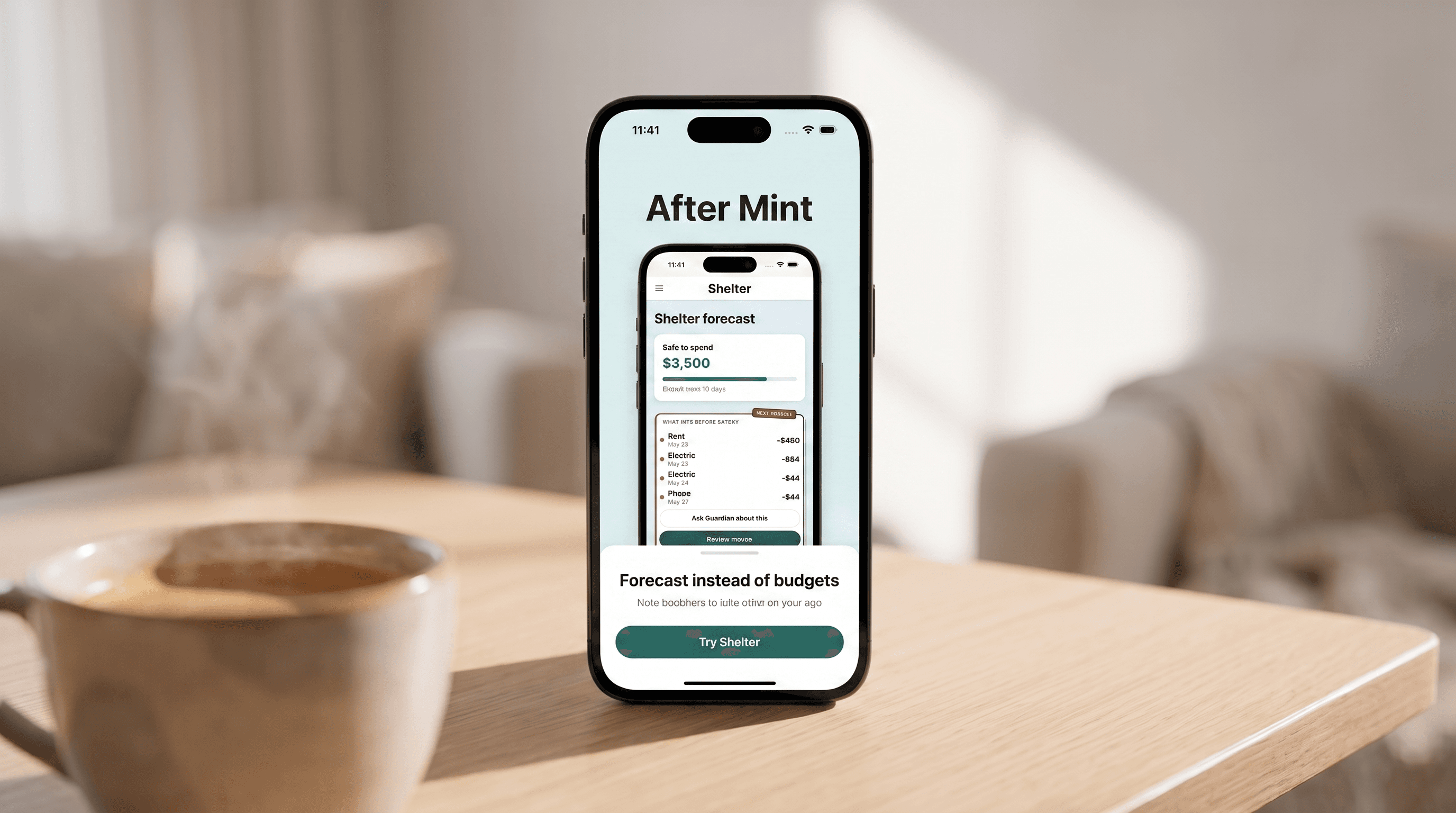
The best Mint alternatives in 2026 are Shelter (for cash flow forecasting and AI coaching), YNAB (for envelope budgeting), Rocket Money (for subscription cancellation), Monarch (for Mint-style visuals), and Copilot (for Apple-first design). Shelter is the closest to what Mint actually did — automatic tracking without manual budgets.
Intuit officially shut down Mint on March 23, 2024. For millions of users who relied on Mint for automatic transaction tracking, bill reminders, and spending categorization, the shutdown created a scramble to find a replacement. Intuit pushed users toward Credit Karma, but Credit Karma is not a Mint replacement-it is a credit monitoring and loan referral platform with some spending tracking bolted on.
If you are looking for something that actually does what Mint did (or better), here are the five best alternatives worth considering in 2026. For a detailed comparison of how Shelter specifically compares as a Mint alternative, see our dedicated guide.
What Made Mint Work
Before evaluating alternatives, it helps to remember why Mint became so popular in the first place:
- Automatic transaction import. You connected your bank accounts and transactions appeared automatically. No manual entry required.
- Automatic categorization. Mint guessed categories for spending and learned from your corrections.
- Bill reminders. Mint detected recurring bills and reminded you before they were due.
- Free price tag. Mint made money by showing ads and recommending financial products, not by charging users.
- Simple budgeting. The "leftover" view showed whether you were on track for the month.
Any true Mint alternative needs to handle at least the first three of these well. The last two-free pricing and simple budgeting-are where modern alternatives diverge based on different philosophies about how personal finance software should work.
1. Shelter: Best for Cash Flow Forecasting
Shelter is the Mint alternative that picks up where Mint left off and adds what Mint never had: forward-looking cash flow visibility.
What it does like Mint:
- Automatic transaction import and categorization through bank connections
- Recurring bill and subscription detection
- Clean, simple interface without investment tracking bloat
- Mobile-first design for checking finances on the go
What it adds that Mint lacked:
- 30-day cash flow forecasting. Shelter projects your account balance forward based on upcoming bills, subscriptions, and typical spending. You see tight weeks before they happen, not after.
- Overdraft alerts. The app flags days when your projected balance drops close to zero, giving you time to adjust spending or move money.
- Safe-to-spend guidance. Instead of just showing what you spent, Shelter tells you what you can actually afford to spend right now without jeopardizing upcoming bills.
The tradeoff: Shelter costs $9.99/month. There is no free tier. The company makes money from subscriptions, not from showing you credit card offers or selling your data. For users who relied on Mint because it was free, this is a change. For users who are tired of being the product, it is an upgrade.
Best for: People who used Mint to avoid overdrafts and manage tight cash flow between paychecks. If you cared more about knowing whether you could afford dinner than tracking your net worth, Shelter is probably your best fit.
2. Rocket Money: Best for Subscription Management
Rocket Money (formerly Truebill) emerged as one of the most popular Mint alternatives specifically because it doubled down on one of Mint's most useful features: finding and canceling unwanted subscriptions.
What it does well:
- Subscription detection. Rocket Money is aggressive about finding recurring charges you might have forgotten about. It catches more obscure subscriptions than most alternatives.
- Cancellation assistance. The app can actually cancel subscriptions for you, handling the customer service interactions that many people procrastinate on.
- Bill negotiation. Rocket Money will try to negotiate lower rates on your phone, internet, and insurance bills-for a percentage of the savings.
Where it differs from Mint: Rocket Money is less focused on day-to-day budgeting and more focused on finding savings. The budgeting features exist but feel secondary. If you used Mint primarily to track spending categories and stay within monthly limits, Rocket Money might feel light.
The pricing model: Rocket Money uses "pay what you think is fair" pricing for its basic features, then takes a cut of any savings it finds. For subscription cancellation and bill negotiation, you pay a percentage of what they save you. This can add up if you have a lot of subscriptions to cut.
Best for: People with subscription bloat who want help canceling services and negotiating bills. If your Mint account was full of forgotten free trials that converted to paid plans, Rocket Money is designed for exactly that problem.
3. YNAB (You Need A Budget): Best for Hardcore Budgeters
YNAB is not a Mint replacement-it is a completely different approach to personal finance. Where Mint showed you what you already spent, YNAB forces you to give every dollar a job before you spend it.
The YNAB method:
- Zero-based budgeting. Every dollar of income is assigned to a category before the month starts. There is no "leftover" view-everything has a purpose.
- Emphasis on aging your money. YNAB tracks how long money sits in your account before being spent. The goal is to get to the point where you are spending money that is 30+ days old.
- Proactive, not reactive. You plan spending in advance rather than reviewing it afterward.
The learning curve: YNAB has a steeper learning curve than Mint. The method is powerful but requires a mindset shift. Many ex-Mint users try YNAB and bounce off because they want automatic tracking, not manual budgeting discipline.
Pricing: YNAB is $14.99/month or $99/year. There is a 34-day free trial.
Best for: People who tried Mint, found it too passive, and want a more structured approach to budgeting. If you are willing to put in the work to plan spending in advance, YNAB is more powerful than Mint ever was. If you want something that works automatically in the background, YNAB will frustrate you.
4. Monarch Money: Best for Mint's Visual Style
Monarch Money is often described as "what Mint would have become if it stayed independent and focused on user experience." The interface is clean, modern, and familiar to anyone coming from Mint.
What it does like Mint:
- Automatic transaction import and categorization
- Customizable spending categories and budgets
- Net worth tracking and investment monitoring
- Bill reminders and recurring transaction detection
- Clean dashboard with monthly spending summaries
What it adds:
- Collaborative budgeting. Monarch is designed for couples who want to manage money together. You can share budgets and goals with a partner.
- More customization. Categories, rules, and dashboard widgets are more flexible than Mint's were.
- No ads. Like Shelter, Monarch charges a subscription ($14.99/month or $99/year) instead of showing advertisements.
The downside: Monarch does not do cash flow forecasting. It shows you what happened and helps you budget for what is coming, but it does not project your account balance forward or warn you about upcoming low-balance days.
Best for: Mint users who loved the visual style and want something that feels familiar, but without the Intuit bloat and advertisements. If you used Mint for monthly budgeting and net worth tracking and do not need forward-looking cash flow, Monarch is the closest aesthetic match.
5. Copilot: Best for iOS Users
Copilot is an iOS-first personal finance app that combines Mint-style transaction tracking with YNAB-style envelope budgeting. It is only available for iPhone and Mac-there is no Android version or web app.
What it does well:
- Beautiful interface. Copilot is arguably the best-looking personal finance app available. The design is thoughtful, with smooth animations and clear data visualization.
- Flexible budgeting. You can use it like Mint (track spending after the fact) or like YNAB (assign money to categories in advance). The app adapts to your style.
- Investment tracking. Unlike Shelter, Copilot includes investment monitoring and net worth calculation.
- Siri integration. You can ask Siri about account balances and recent transactions.
The limitations:
- iOS only. No Android, no web version. If you ever switch away from iPhone, you lose access.
- No cash flow forecasting. Like Monarch, Copilot shows you what happened and helps you budget, but does not project future balances or warn about overdraft risk.
- Price: $12.99/month or $95.99/year.
Best for: iPhone users who want a beautiful, well-designed app and do not need cash flow forecasting or Android access. If you live entirely in the Apple ecosystem and prioritize design, Copilot is worth the platform limitation.
Quick Comparison Table
| Feature | Shelter | Rocket Money | YNAB | Monarch | Copilot |
|---|---|---|---|---|---|
| Automatic import | ✓ | ✓ | ✓ | ✓ | ✓ |
| Cash flow forecast | ✓ | ✗ | ✗ | ✗ | ✗ |
| Subscription cancel | ✗ | ✓ | ✗ | ✗ | ✗ |
| Zero-based budget | ✗ | ✗ | ✓ | ✗ | ✓ |
| Investment tracking | ✗ | ✗ | ✗ | ✓ | ✓ |
| iOS only | ✗ | ✗ | ✗ | ✗ | ✓ |
| Monthly price | $9.99 | Variable | $14.99 | $14.99 | $12.99 |
Which One Should You Choose?
Choose Shelter if: You used Mint to avoid overdrafts, track bills, and manage tight cash flow between paychecks. The forward-looking forecast is the feature you did not know you needed.
Choose Rocket Money if: Your main problem is subscription bloat and you want help canceling services and negotiating bills.
Choose YNAB if: You are ready to commit to a proactive budgeting method and want more control than Mint ever gave you.
Choose Monarch if: You loved Mint's interface and want the closest visual match with modern polish and no ads.
Choose Copilot if: You are all-in on Apple devices and want the best-designed personal finance app available.
The Bottom Line
There is no perfect Mint replacement because Mint tried to be everything to everyone. The best approach is to figure out what you actually used Mint for, then pick the alternative that does that one thing best.
If you mostly checked Mint to see whether you could afford something before buying it, try Shelter. The cash flow forecast answers that question directly instead of making you interpret categories and budget leftovers.
If you used Mint primarily to track net worth and investments, Monarch or Copilot are better fits.
If you never quite figured out budgeting and want a system that forces discipline, YNAB is worth the learning curve.
Mint had a good run. The good news is that in 2026, there are better options for every specific use case-if you are willing to move past the idea of a single free app that does everything moderately well.
Take control of your cash flow
Shelter connects to your bank, forecasts your balance 30 days out, and alerts you before problems happen.